
What to know
Situated at a similar latitude to Venice (Italy) and Portland (Oregon), the Sea of Okhotsk coast of Hokkaido is the southernmost region in the northern hemisphere where drifting sea ice can be observed. The ice usually reaches the Abashiri coast from mid to late January and disappears by late March to mid April. The prime viewing period is typically the second half of February.
Drift ice (ryūhyō) can be seen along the entire Sea of Okhotsk coast from Wakkanai to the Shiretoko Peninsula, but it is thickest around Abashiri. Due to global warming, the volume and thickness of the ice have decreased significantly since the late 1980s.
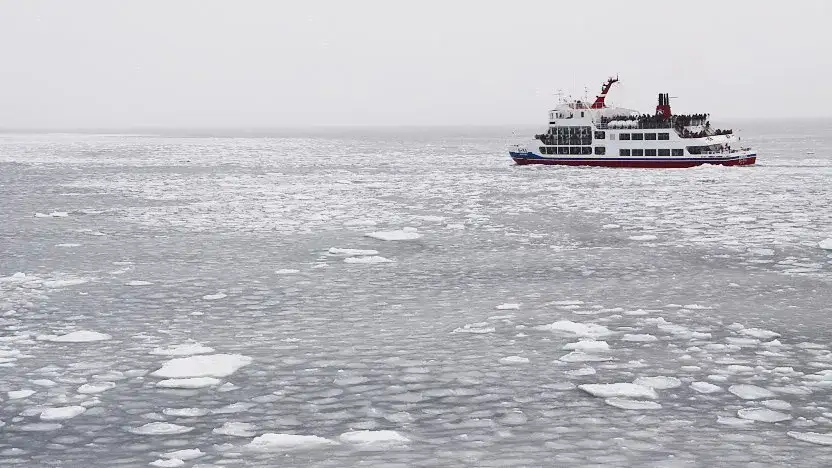
One of the best and easiest ways to experience the drift ice is aboard the Aurora Sightseeing Boats, which depart from Abashiri Port. Since the ice is not always visible from the shore, the boats venture out into the Sea of Okhotsk where ice is more likely to be found. The cruises last about an hour and run several times daily during the ryuhyo season.
Under favorable conditions, the drift ice can also be seen from the coast. A popular way is from the trains running between Abashiri and Shiretoko-Shari Stations. Besides regular trains, a special tourist train operates only during the drift ice season. The Okhotsk Ryuhyo Museum on Mount Tento in Abashiri explains the science behind the sea ice, shows a wide-screen introductory movie, and displays some of the small animals living beneath the ice.
Buses connect Abashiri Station with the boat terminal (10 minutes, 230 yen), stopping at the Abashiri Bus Terminal along the way. Get off at Ryuhyo-saihyosen-noriba (流氷砕氷船のりば).
Visitor information
Practical details to check before planning this stop.
- Hours
- Mid January to late March (January 20 to March 31, 2026)
- Closed
- No closing days
- Admission
- January: 5000 yen (~$32)
- English name
- MS Aurora Sightseeing Boats
- Original name
- Abashiri Drift Ice (Ryuhyo)
Verify details before visiting. Currency conversion is indicative and may vary over time.