
What to know
Though its exact origins remain unknown, Aso Shrine (Aso Jinja) is thought to date back nearly two thousand years to the end of the Yayoi Period (300 BC–300 AD). It has long been regarded as the most important shrine in Higo Province, which is now Kumamoto Prefecture.
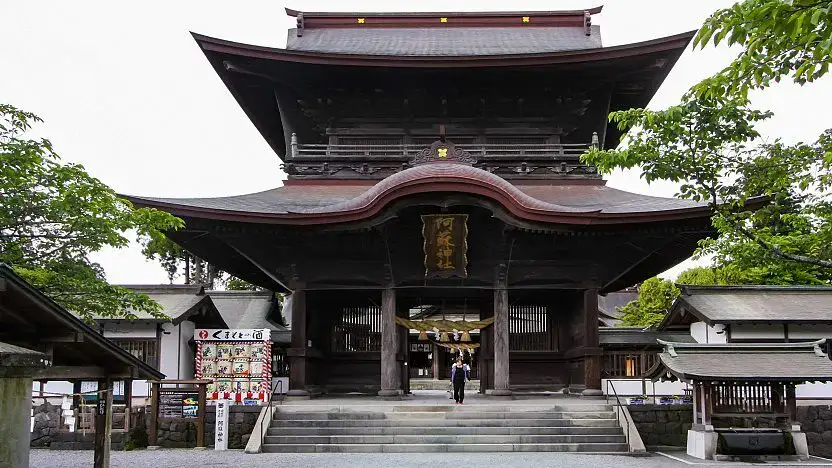
The shrine's most striking feature is its two-story Romon Gate, one of the largest of its kind in Japan. Behind the gate lies the Haiden, or offering hall. Twelve deities are enshrined here, including a god believed to have created the Aso region. The grounds also feature a pine tree said to bring good fortune in marriage.
On April 16, 2016, the celebrated Romon Gate and offering hall collapsed in an earthquake, and many other structures were damaged. Reconstruction took seven and a half years, with work on the Romon Gate completed in December 2023.
Aso Shrine is about a 20-minute walk north from Miyaji Station on the JR Hohi Line (5 minutes, 240 yen from Aso Station, with departures about once an hour).
Visitor information
Practical details to check before planning this stop.
- Hours
- Closed
- Admission
- English name
- Original name
- Aso Shrine
Verify details before visiting. Currency conversion is indicative and may vary over time.