
What to know
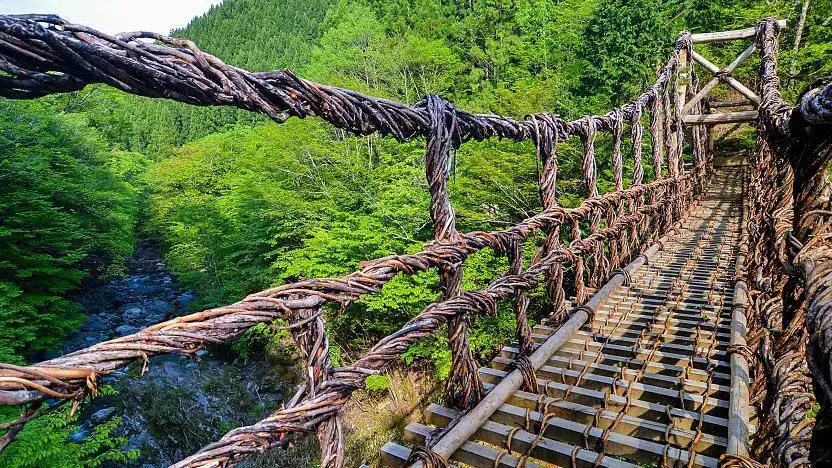
In the Iya Valley, there were once 13 suspension bridges made from mountain vines, known as kazurabashi, which were essential for crossing the river with people and goods. Today, two of these historic bridges remain side by side deep in the inner valley, called the Oku-Iya Kazurabashi (奥祖谷二重かずら橋, Oku-Iya Nijū Kazurabashi).
The larger bridge, Husband Bridge (Otto no Hashi), stretches 44 meters across the river beside a small waterfall, while the slightly lower Wife Bridge (Tsuma no Hashi) spans 22 meters a short distance upstream. For safety, the bridges have steel cables hidden within the vines and are rebuilt every three years. Paved hiking trails connect the two bridges and lead to camping facilities on the far side of the river.
Another popular attraction is the Wild Monkey Bridge, a wooden cart suspended on a rope next to the Wife Bridge. Originally used to transport goods and people, visitors can now pull themselves across the river on it.
A rental car is recommended for visiting the Oku-Iya Kazurabashi Bridges.
Alternatively, take a bus from Awa-Ikeda Station to Kubo (2 hours, 1790 yen, 4 buses/day), then transfer to another bus bound for Nijukazurabashi or Mount Tsurugi, and get off at the Nijukazurabashi (二重かずら橋) bus stop (30 minutes, 430 yen, 2 buses/day). Buses from Kubo to the bridge operate only on weekends and during peak seasons from April to November. Peak seasons include Golden Week, summer holidays (mid-July through August), and the autumn color season (October to early November).
How to get to and around the Iya Valley
Visitor information
Practical details to check before planning this stop.
- Hours
- 9:00 to 17:00 (April to June and September to November)
- Closed
- December to March
- Admission
- 550 yen (~$3.52)
- English name
- Original name
- Oku-Iya Kazurabashi Bridges
Verify details before visiting. Currency conversion is indicative and may vary over time.