
What to know
Okunoto (奥能登, "Inner Noto") covers the northern part of the Noto Peninsula around its tip. This remote, rural area became even more isolated after train lines that served it for decades were discontinued. The main city, Wajima, lies about 25 kilometers from the peninsula's tip.
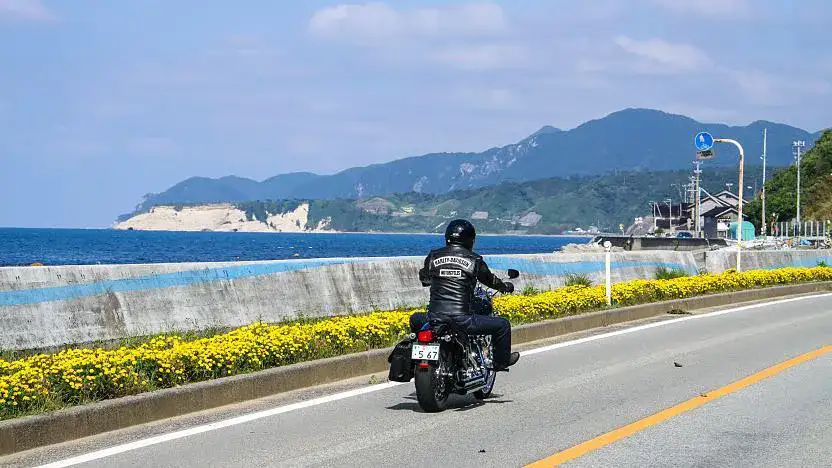
The Okunoto coastline has two faces: a calm inner coast facing the mainland and a rugged outer coast exposed to the Sea of Japan. The inner coast is dotted with fishing villages and small boats, while the outer coast offers dramatic views of wild terrain. A particularly scenic 2.5-kilometer stretch along the outer coast is the Sosogi Coast.
The most famous sight on the outer coast is Senmaida, a hillside of terraced rice fields overlooking the Sea of Japan. Over 2,000 tiny fields are cultivated by hand—senmaida literally means "a thousand rice fields." Easily accessible from the main road, it has a parking lot and visitor center for cars and tour buses.
A highlight on the inner coast is Mitsukejima rock. Mitsukejima means "found island," and legend says it was first discovered over a thousand years ago by Kobo Daishi, a key figure in Japanese Buddhism. The rock rises about 30 meters, towering over visitors who walk along the rock path for a closer view. A nearby bell is said to bring good luck to couples who ring it together.
About three kilometers away, another group of interesting rock formations can be found at Koiji Beach, literally "Beach of the Path to Love." Despite the name, a sad story is attached: hundreds of years ago, two lovers met a tragic end in the waters here. After one was tricked into drowning by a jealous suitor, the other jumped in to die as well. By ringing the bell at Mitsukejima, perhaps visitors will have better luck in love.
At the very tip of the peninsula is Cape Rokkozaki, home to the pretty Rokkozaki Lighthouse, a ten-minute walk from the nearest parking lot and bus stop. Unfortunately, visitors cannot enter the Meiji-era building and can only view it from outside. From the cape, there are views over the water, and signs point to major Asian cities with distances.
Visitor information
Practical details to check before planning this stop.
- Hours
- 9:00 to 17:00 (until 16:00 from December to February)
- Closed
- No closing days
- Admission
- 100 yen (~$0.64)
- English name
- Original name
- Okunoto Coast
Verify details before visiting. Currency conversion is indicative and may vary over time.