
What to know
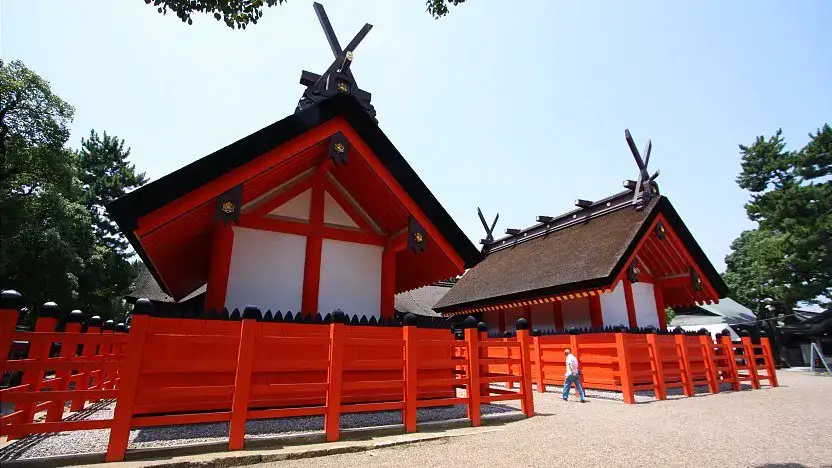
Osaka's Sumiyoshi Taisha (住吉大社, "Sumiyoshi Grand Shrine") ranks among Japan's oldest shrines. Founded in the 3rd century, before Buddhism arrived, it showcases a unique architectural style called Sumiyoshi-zukuri, which shows no influence from mainland Asia. Only two other shrine styles are considered purely Japanese: Shinmei-zukuri (seen at Ise Shrines) and Taisha-zukuri (seen at Izumo Taisha).
Sumiyoshi-zukuri features straight roofs, unlike the curved roofs common in later centuries, decorated with two sets of forked finials (chigi) and five horizontal billets (katsuogi). Buildings in this style have their entrance under the gable and are surrounded by a fence.
Sumiyoshi Taisha is the head and most famous of over two thousand Sumiyoshi shrines across Japan. These shrines honor the kami (Shinto gods) who protect travelers, fishermen, and sailors at sea, so they are usually located near harbors.
Osaka's Sumiyoshi Taisha has four main halls. Notably, the first three align in a straight line facing west, while the fourth stands right next to the third. This arrangement is rare in Japan, as shrines built during and after the Nara Period (710-794) mostly face south due to Chinese geomancy.
The beautiful Sorihashi Bridge, forming a uniquely high arch over a pond, leads to the main shrine grounds. During hatsumode (first shrine visit of the New Year), Sumiyoshi Taisha is one of the most visited shrines in the country.
Sumiyoshi Taisha is in southern Osaka, a short walk from Sumiyoshi Taisha Station on the Nankai Main Line (10 minutes, 240 yen one way from Nankai Namba Station by local trains). Note that faster train categories do not stop at Sumiyoshi Taisha Station.
Visitor information
Practical details to check before planning this stop.
- Hours
- 6:00 to 17:00 (from 6:30 from October through March)
- Closed
- No closing days
- Admission
- Free
- English name
- Sumiyoshi Taisha
- Original name
- Sumiyoshi Taisha
Verify details before visiting. Currency conversion is indicative and may vary over time.