
What to know
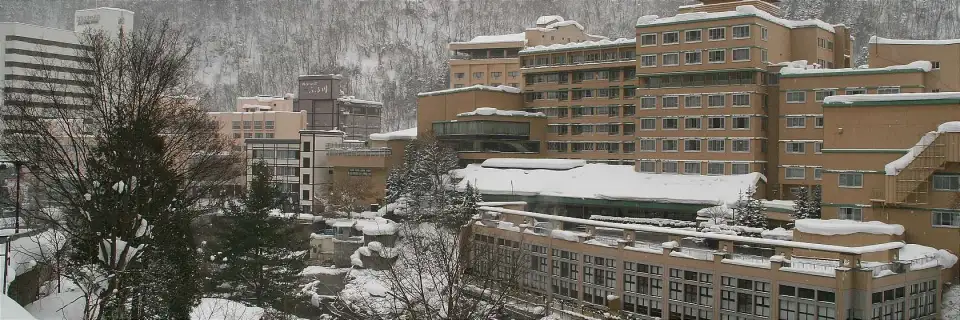
Jozankei Onsen (定山渓温泉, Jōzankei Onsen) lies within Shikotsu-Toya National Park, nestled between the steep cliffs of the Toyohira River. Just an hour from central Sapporo, it's a popular side trip from the city. Consequently, Jozankei is more developed than smaller onsen towns in Hokkaido.
The hot springs of Jozankei were discovered in 1866, and today the town boasts dozens of ryokan, restaurants, and shops catering to spa visitors. Many ryokan allow day visitors to use their baths for a fee, typically 500 to 2000 yen. Free foot baths are also scattered around town.
Beyond being a hot spring destination, Jozankei is a prime spot for fall foliage, when the trees along the valley and side valleys turn brilliant yellows and reds. The best time to see the leaves is usually around mid-October.
Iwato Kannondo is a unique temple in central Jozankei, as most of it is inside a cave. Built for road workers who died during tunnel construction, the cave is 120 meters long and features 33 statues of Kannon, the Buddhist deity of compassion, placed at intervals along the way.
From Sapporo Station Bus Terminal, take Jotetsu Bus number 7 or 8 bound for Jozankei Onsen. Buses depart roughly every hour, take 75 minutes, and cost 1000 yen one way.
Alternatively, catch Jotetsu Bus number 12 from Makomanai Station, the terminal of Sapporo's Namboku Subway Line. From Makomanai Station, the one-way trip to Jozankei Onsen takes 50 minutes and costs 750 yen. Buses run every 30-60 minutes.
Visitor information
Practical details to check before planning this stop.
- Hours
- 7:00 to 20:00
- Closed
- No closing days
- Admission
- 300 yen (~$1.92)
- English name
- Jozankei Tourist Association
- Original name
- Jozankei Onsen
Verify details before visiting. Currency conversion is indicative and may vary over time.