
What to know
The Inner Shrine (内宮, Naikū) is one of the two main shrines of the Ise Shrines in Ise City. Officially called Kotai Jingu, it enshrines Shinto's most revered deity, the Sun Goddess Amaterasu Omikami, and is considered Japan's holiest shrine.
Believed to have been founded over 2,000 years ago, the Inner Shrine's main buildings resemble ancient rice granaries and are built in a style that shows little influence from mainland Asia, predating the introduction of Buddhism. Both the Inner and Outer Shrines are completely rebuilt every 20 years. The 62nd reconstruction was completed in 2013, and the 63rd is scheduled for 2033.
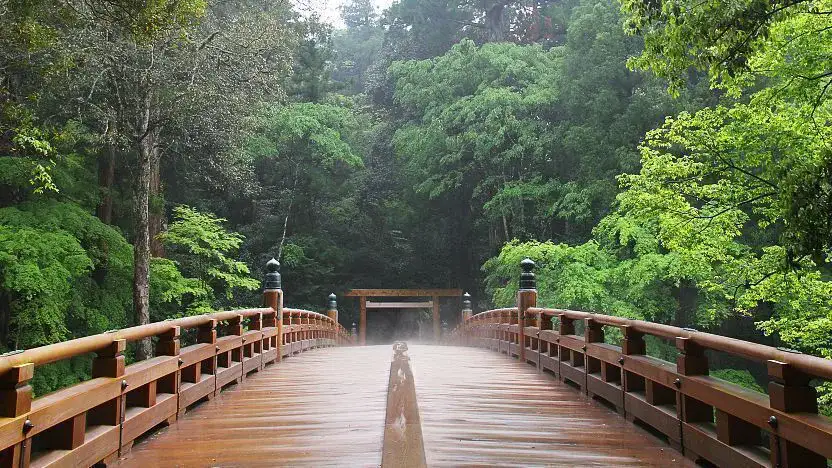
A typical visit lasts 60 to 90 minutes, starting at Uji Bridge, a 100-meter-long wooden bridge across the Isuzugawa River. The bridge has two large torii gates, one at each end, made from the main pillars of the former shrine building. The grounds impress with their simplicity: gravel paths and barely painted wooden structures surrounded by serene forest.
After passing the purification trough and another torii gate, visitors have a unique opportunity to cleanse themselves at a riverside site using the sacred waters of the Isuzugawa River. Further along the approach to the main sanctuary, you'll find the Kaguraden, a building complex where charms and amulets are sold.
The main sanctuary sits atop a flight of stone stairs. The main hall enshrines the Sun Goddess and is surrounded by multiple fences. Visitors may only go beyond the outermost fence, and photography is not allowed. Partially visible, the main hall features forked roof finials (chigi) cut horizontally at the tips and ten decorative wooden beams (katsuogi), slightly different from those at the Outer Shrine.
Several auxiliary shrines are on the grounds: a beautiful wooden bridge (shown in the top photo) leads from the Kaguraden to Kazahinominomiya, which enshrines two wind deities. On a small hill next to the main shrine stands Aramatsurinomiya, enshrining the spirit of the Sun Goddess. There is also an ancient rice granary called Mishinenomikura, where rice for offerings is stored.
Visitor information
Practical details to check before planning this stop.
- Hours
- 5:00 to 18:00 (January to April, September)
- Closed
- No closing days
- Admission
- Free
- English name
- Ise Jingu
- Original name
- Inner Shrine (Naiku)
Verify details before visiting. Currency conversion is indicative and may vary over time.