
What to know
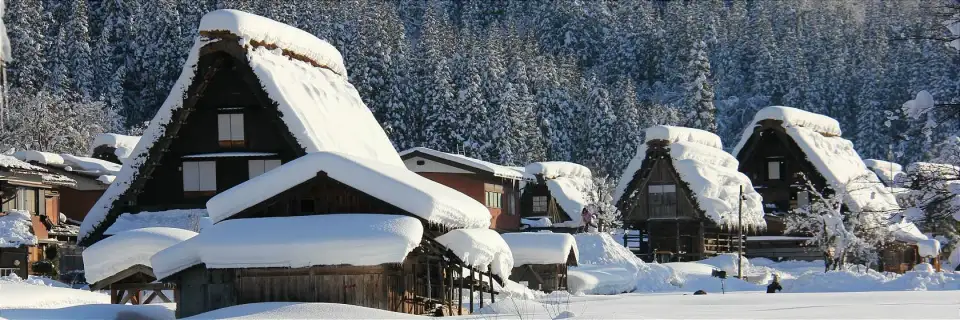
Shirakawa-go (白川郷) and neighboring Gokayama (五箇山) lie along the Shogawa River Valley in the remote mountains spanning Gifu and Toyama Prefectures. Designated a UNESCO World Heritage site in 1995, they are celebrated for their traditional gassho-zukuri farmhouses, some over 250 years old.
Gassho-zukuri means "built like hands in prayer," referring to the steep thatched roofs that resemble Buddhist monks' hands pressed together. This architectural style evolved over generations to withstand the heavy snowfall typical of the region in winter. The roofs, constructed without nails, also provide a large attic space historically used for silkworm cultivation.
Ogimachi, the largest village in Shirakawa-go and its main attraction, works well as a day trip from Takayama or as a stop on the bus route between Takayama and Kanazawa. However, the best way to experience the town is to stay overnight in one of the farmhouses, many of which operate as minshuku (guesthouses).
Gokayama is a bit harder to reach, requiring a bus change in Ogimachi. Less developed and less crowded than Shirakawa-go, its villages are smaller, more intimate, and have fewer modern intrusions. The nicest villages in Gokayama are Suganuma and Ainokura.
Visitor information
Practical details to check before planning this stop.
- Hours
- Closed
- Admission
- English name
- Shirakawa-go Tourist Association
- Original name
- Shirakawa-go and Gokayama
Verify details before visiting. Currency conversion is indicative and may vary over time.