
What to know
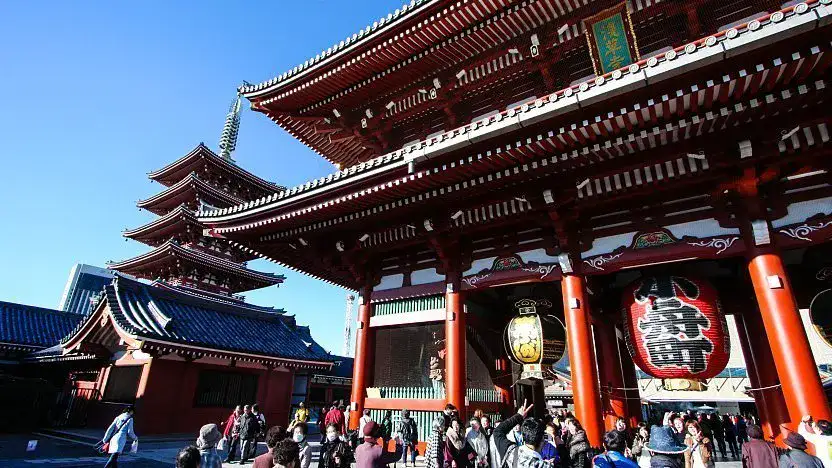
Sensoji (also known as Asakusa Kannon Temple) is a Buddhist temple in Asakusa, one of Tokyo's most vibrant and popular temples.
Legend has it that in 628, two brothers fished a statue of Kannon, the goddess of mercy, from the Sumida River. Though they returned the statue to the river, it always came back to them. So Sensoji was built nearby to honor Kannon. Completed in 645, it is Tokyo's oldest temple.
Visitors first pass through Kaminarimon (Thunder Gate), the temple's outer gate and a symbol of Asakusa and all of Tokyo.
A 200-meter shopping street called Nakamise leads from the outer gate to the second gate, Hozomon. Alongside typical Japanese souvenirs like yukata and folding fans, traditional local snacks from Asakusa are sold. This shopping street has a history spanning several centuries.
Beyond Hozomon Gate stand the temple's main hall and a five-story pagoda. Destroyed during the war, these buildings are relatively recent reconstructions. Asakusa Shrine, built in 1649 by Tokugawa Iemitsu, sits right next to the main building.
Various events take place at Sensoji throughout the year. The biggest is Sanja Matsuri, the annual festival of Asakusa Shrine, held in May. Other events include the Asakusa Samba Carnival in August and the Hagoita-ichi (Hagoita Market), where decorated wooden paddles used in the traditional game of hanetsuki are sold.
Visitor information
Practical details to check before planning this stop.
- Hours
- Main hall: 6:00 to 17:00 (from 6:30 from October to March)
- Closed
- No closing days
- Admission
- Free
- English name
- Sensoji Temple
- Original name
- Sensoji Temple
Verify details before visiting. Currency conversion is indicative and may vary over time.