
What to know
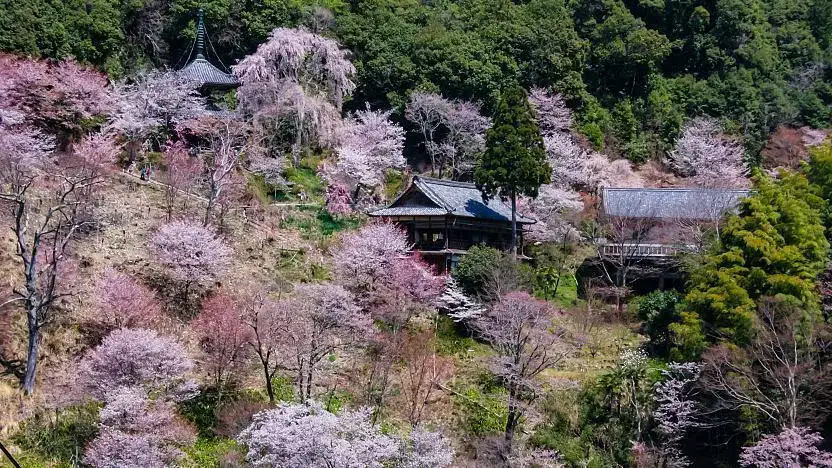
Founded in the 10th century, Nyoirinji Temple (如意輪寺) is a tranquil, medium-sized temple of the Jodo sect of Buddhism. Perched on a hillside opposite Yoshino's main cluster of temples, it was where Emperor Go-Daigo prayed after moving his capital to Yoshino during the period of two rival Imperial Courts (1336–1392). The emperor died in Yoshino, and his and his consort's mausoleums lie in the forested slope just above the temple grounds.
Nyoirinji also features a tahoto-style pagoda and a treasure house. The treasure house displays mandalas, religious objects, and artifacts from Emperor Go-Daigo's court. Among the exhibits are paintings depicting Kusunoki Masatsura, the emperor's loyal retainer, offering a final prayer at Nyoirinji before departing to his death defending the emperor against the Northern Court forces. Kusunoki and other defenders inscribed their names and a poem on the temple door, which is also preserved.
Nyoirinji Temple is set apart from most of Yoshino's sites on the opposite side of the valley. It can be reached on foot in about 45 minutes from the upper station of the Yoshino Ropeway (Yoshinoyama Station), or in about 20 minutes from the Nakasenbon Koen Bus Stop halfway up the mountain.
Alternatively, it is a 30-minute walk between Yoshino Station and the temple along a small mountain road that follows the valley floor.
Visitor information
Practical details to check before planning this stop.
- Hours
- 9:00 to 16:00 (outside cherry blossom season)
- Closed
- No closing days
- Admission
- 600 yen (~$3.84) (treasure house and pagoda)
- English name
- Original name
- Nyoirinji Temple
Verify details before visiting. Currency conversion is indicative and may vary over time.