
What to know
The Sannai Maruyama Archaeological Site (三内丸山遺跡, Sannai Maruyama Iseki) is the largest and best-preserved Jomon Period (13000–300 BC) village discovered in Japan. It was found by chance during a survey for a baseball field and once contained over 700 structures, including longhouses, storage pits, roads, and burial sites.
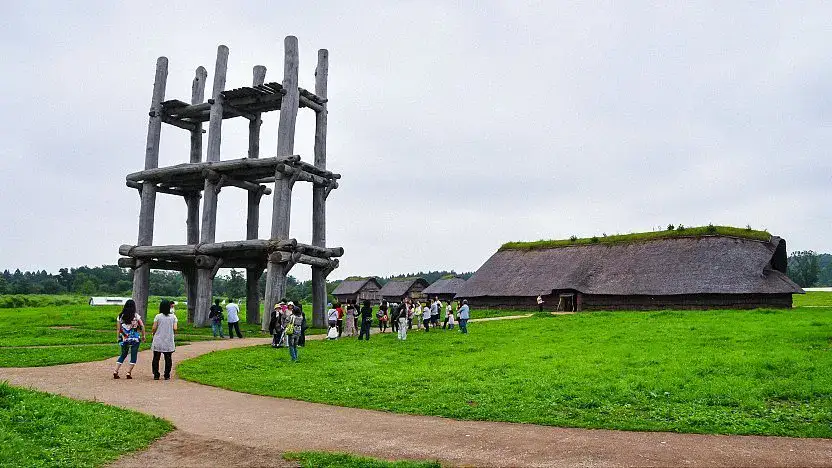
After excavation and study, the village was reburied, and reconstructions of pit dwellings, longhouses, and a large tower were built on top. Visitors can enter these reconstructions, some of which are quite spacious, and view original excavation areas around the grounds.
Next to the site, the Jomon Jiyukan museum displays artifacts from the area and explains Jomon life. You can try on Jomon clothing, use ancient tools, and make handicrafts. A restaurant serves food typical of what the Sannai Maruyama villagers ate.
In 2021, the Sannai Maruyama Archaeological Site, along with similar sites in northern Tohoku and Hokkaido, was inscribed as a UNESCO World Cultural Heritage Site. It pairs well with a visit to the nearby Aomori Museum of Art, whose architecture echoes the excavation site.
The site is a 20-minute, 310 yen bus ride from Aomori Station (get off at Sannai-Maruyama-Iseki-mae stop) and a five-minute walk from the Aomori Museum of Art.
Visitor information
Practical details to check before planning this stop.
- Hours
- 9:00 to 17:00 (until 18:00 from June through September)
- Closed
- Fourth Monday of every month (or following day if Monday is a national holiday), December 30 to January 1
- Admission
- 410 yen (~$2.62)
- English name
- Sannai Maruyama Site
- Original name
- Sannai Maruyama Site
Verify details before visiting. Currency conversion is indicative and may vary over time.