
What to know
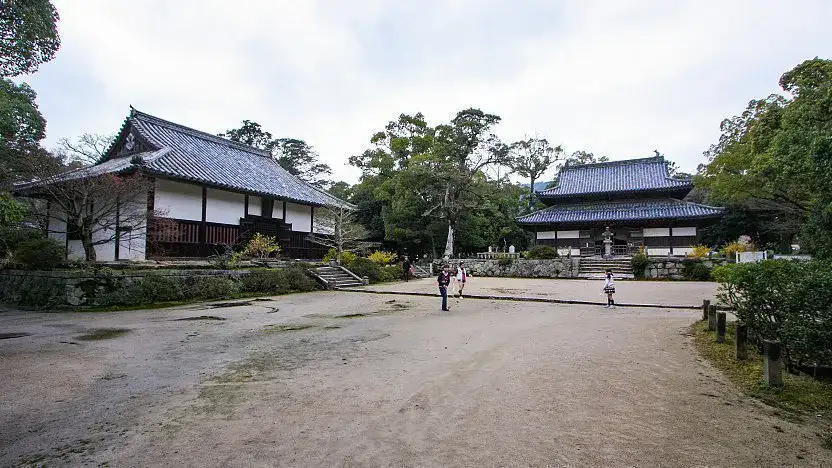
Kanzeonji (観世音寺) is a Tendai sect Buddhist temple built in 746 by an emperor in memory of his mother. During the Nara and Heian periods (710–1185), when Dazaifu was the political hub of Kyushu, Kanzeonji was the region's most important temple. Its significance waned as Dazaifu's influence declined.
Over the centuries, Kanzeonji lost many structures, including large gates and a pagoda. Today, only a few buildings remain: the main hall, lecture hall, and bell tower. The main hall and lecture hall were last rebuilt in the 17th century, while the bell tower houses Japan's oldest bell, cast in the 7th century.
Despite its reduced state, Kanzeonji preserves many cultural treasures from the Nara, Heian, and early Kamakura periods. Most notable are several large wooden Buddhist statues, some over five meters tall. Originally kept in the temple halls, they are now displayed in the Treasure Hall, a concrete building from the 1950s—don't let its plain exterior deter you from visiting.
Just steps from Kanzeonji is Kaidanin Hall, also founded in the Nara period. Historically, it was one of only three temples in Japan where monks could be officially ordained, alongside Nara's Todaiji Temple and the former Yakushiji Temple in Tochigi Prefecture. Besides its main building, a small gate and bell tower survive.
Kanzeonji Temple is a 20-minute walk from Dazaifu Station or 15 minutes from Gojo Station. It is also a short walk from Dazaifu City Hall (太宰府市役所, Dazaifu Shiyakusho), where Dazaifu Liner buses between Fukuoka and Dazaifu, as well as bus line 4-1, stop (3 minutes, 100 yen from Dazaifu Station, 2–4 buses per hour).
Visitor information
Practical details to check before planning this stop.
- Hours
- Always open
- Closed
- No closing days
- Admission
- Free
- English name
- Original name
- Kanzeonji Temple
Verify details before visiting. Currency conversion is indicative and may vary over time.