
What to know
Kubota Itchiku (1917–2003) revived the lost art of Tsujigahana, a silk-dyeing technique used to adorn elaborate kimono during the Muromachi Period (1333–1573). In his early twenties, he was so inspired by a fragment of Tsujigahana textile at the Tokyo National Museum that he dedicated his life to recreating and mastering this labor-intensive craft.
This intriguing museum, set in wooded hills along the northern shore of Lake Kawaguchiko, showcases many of the artist’s kimono creations. The pieces depict themes of nature, the cosmos, and the seasons. Also on display are parts of his unfinished masterpiece, "Symphony of Light," a monumental work of 80 kimono that together form a picture of Mount Fuji.
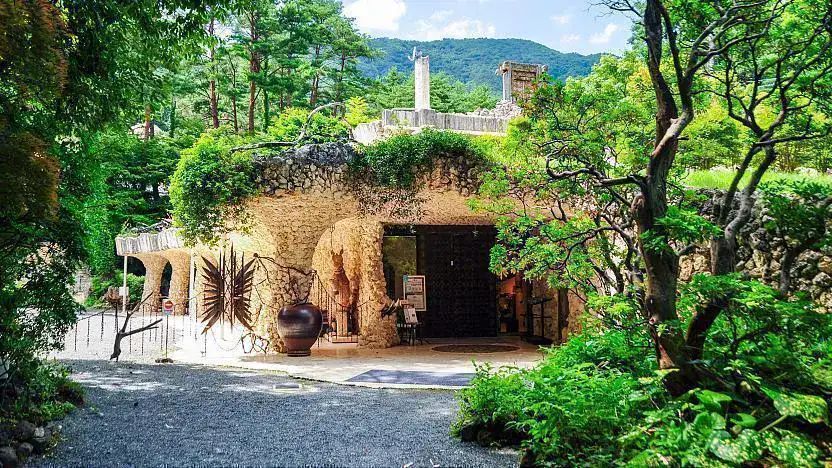
The museum’s buildings and gardens are equally fascinating. The structures are built from Okinawan coral and limestone, while the main gallery features a massive timber frame. A waterfall and outdoor stage sit beside the reception building, where events are occasionally held. A unique tea room is located at the back of the gallery.
The extensive gardens, designed by Kubota Itchiku himself, stretch from the entrance gate far into the wooded slopes behind the museum. They are well worth a stroll, with artworks from Asia and Africa placed around the grounds.
The Omni Bus Red Line (Kawaguchiko Line) runs frequently between Kawaguchiko Station and the Kubota Itchiku Bijutsukan bus stop, from where it’s a short walk to the museum entrance. The bus ride takes about 25 minutes.
How to get to and around the Fuji Five Lakes
Visitor information
Practical details to check before planning this stop.
- Hours
- 10:00 to 17:00 (until 16:30 from December to March)
- Closed
- Typically closed on Tuesdays from March to May and in October, on Tuesdays and Wednesdays from June to September, and from Tuesday to Friday from December to February. Please check
- Admission
- 1500 yen (~$9.6)
- English name
- Kubota Itchiku Art Museum
- Original name
- Kubota Itchiku Art Museum
Verify details before visiting. Currency conversion is indicative and may vary over time.