
What to know
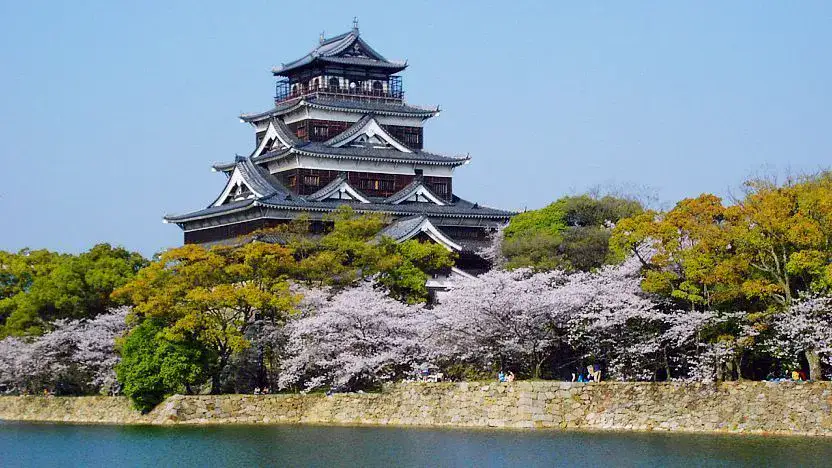
Hiroshima Castle (広島城, Hiroshimajō), also known as Carp Castle, is a fine example of a flatland castle built in the heart of a city, unlike hilltop or mountain fortresses. Its five-story main keep stands within a moat, and the grounds contain a shrine, ruins, and several reconstructed buildings from the Ninomaru (second defensive ring).
Hiroshima grew as a castle town, with the castle serving as both the physical and economic hub. Constructed in 1589 by the powerful feudal lord Mori Terumoto, it was a key center of power in western Japan. While it survived the demolitions of the Meiji Period, like the rest of the city, Hiroshima Castle was destroyed by the atomic bomb in 1945.
Thirteen years later, the main keep was rebuilt in ferro-concrete with an attractive, partially wooden exterior. The interior was permanently closed to the public in March 2026 due to earthquake resistance concerns. There are hopes to eventually rebuild the keep in wood, but no decision has been made, and the keep itself will remain standing in the meantime.
In other restoration efforts, some structures of the Ninomaru, the castle's second defensive ring, were reconstructed in the 1990s using original methods and materials. These include the main gate and two turrets connected by a long storehouse. Visitors can enter these buildings and view exhibits about their reconstruction.
The castle is a ten-minute walk from Kamiyacho-nishi or Kamiyacho-higashi tram stop (12 minutes, 240 yen from Hiroshima Station via lines 1, 2, or 6). It is also a ten-minute walk from Shukkeien Garden or a 15-minute walk from the Peace Memorial Park.
Alternatively, the castle is served by the orange and lemon routes of the Hiroshima Sightseeing Loop Bus (Meipuru-pu). The ride from Hiroshima Station takes six minutes, with 4-5 buses per hour.
Visitor information
Practical details to check before planning this stop.
- Hours
- Always open
- Closed
- No closing days
- Admission
- Free
- English name
- Original name
- Hiroshima Castle
Verify details before visiting. Currency conversion is indicative and may vary over time.