
What to know
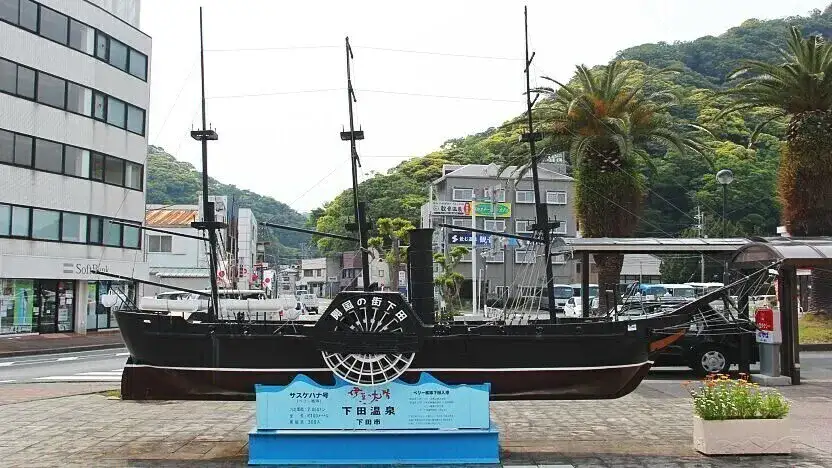
In 1853, when Japan still isolated itself from the world, Commodore Matthew C. Perry sailed to Japan to request the opening of Japanese ports to US ships. The following year, Perry returned with a squadron of nine warships, the famous black ships (kurofune), to enforce his demand. In spring 1854, the Shimoda Treaty was signed, opening the ports of Shimoda and Hakodate to American vessels.
Although humiliating for Japan at the time, Perry's arrival has become Shimoda's top tourist draw. Monuments to the commodore and his black ships are everywhere. A memorial in Shimoda Park marks the start of US-Japan diplomatic relations.
Other Perry-related sites include Ryosenji Temple, where the treaty was signed in 1854. Its treasure house displays Perry artifacts. There's also Perry Road, a scenic canal-side street lined with cafes, boutiques, and willow trees, connecting Shimoda Park with Ryosenji Temple. Shops along Perry Road and across Shimoda sell Perry-themed souvenirs and foods.
Visitors can take a 25-minute sightseeing cruise around Shimoda Port on a ship designed to resemble a black ship. The boarding point is a 15-minute walk from Izukyu-Shimoda Station. The Kurofune Matsuri, an annual festival in mid-May, commemorates Perry's arrival with a parade and events.
The Perry-related sights are spread across Shimoda. Shimoda Park, Ryosenji Temple, and Perry Road are a 15–20 minute walk south of Izukyu-Shimoda Station, or about five minutes by bus to the Shimoda Aquarium (get off at Ryosenji bus stop; 200 yen one way, hourly).
How to get to and around Shimoda How to get to and around the Izu Peninsula
Visitor information
Practical details to check before planning this stop.
- Hours
- 9:10 to 15:30
- Closed
- During bad weather or high waves
- Admission
- 1500 yen (~$9.6) (first class deck an additional 500 yen (~$3.2))
- English name
- Original name
- Perry’s Black Ships
Verify details before visiting. Currency conversion is indicative and may vary over time.