
What to know
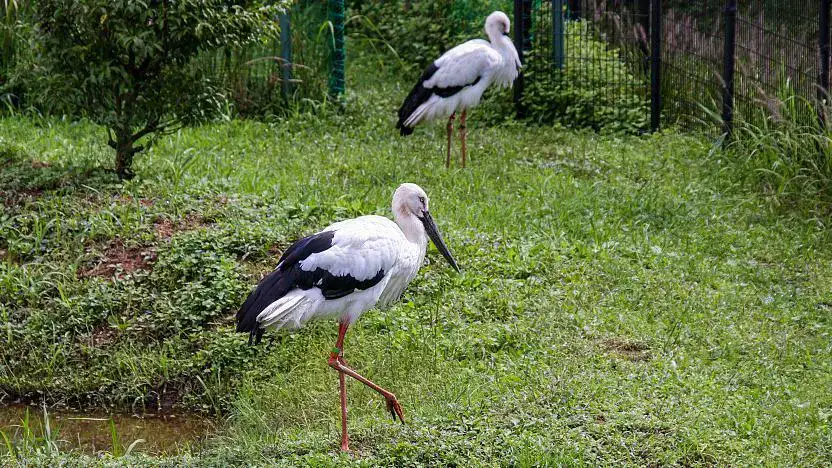
The Oriental Stork (konotori) went extinct in Japan due to modern farming that reduced its prey—frogs, fish, and other wetland animals. The last wild bird died near Kinosaki in 1971.
Konotori no Sato Park (コウノトリの郷公園, Kōnotori no Sato Kōen) was established to reintroduce the storks to Japan using birds from Russia. The storks are now a specially protected animal and a symbol of the Tajima region around Kinosaki; even the local airport is named after them (Konotori Tajima Airport).
Located 10 kilometers south of Kinosaki, the park is part museum and part breeding habitat. Visitors can learn about the storks, the breeding program, and conservation efforts, and see the birds on the sanctuary grounds.
The program is succeeding: local farmers are adapting their practices to preserve wetland habitats, and storks are being successfully reintroduced into the wild. In May 2007, for the first time since 1964, a stork chick hatched in the wild. Its parents were born at the sanctuary and released.
Konotori no Sato Park is about 10 kilometers south of Kinosaki Onsen and 4 kilometers east of Toyooka city center. Buses run from Toyooka Station roughly every 90 minutes (15 minutes, 250 yen one way). A taxi takes about 10 minutes and costs around 2000–2500 yen.
Toyooka Station is a 10-minute train ride from Kinosaki Onsen Station. Limited express trains from Kyoto and Osaka to Kinosaki also stop at Toyooka Station. The bus from Konotori Tajima Airport to Toyooka Station takes 15 minutes.
Visitor information
Practical details to check before planning this stop.
- Hours
- 9:00 to 17:00
- Closed
- Mondays (or following day if Monday falls on a national holiday)
- Admission
- Free
- English name
- Hyogo Park of the Oriental White Stork
- Original name
- Konotori no Sato Park
Verify details before visiting. Currency conversion is indicative and may vary over time.