
What to know
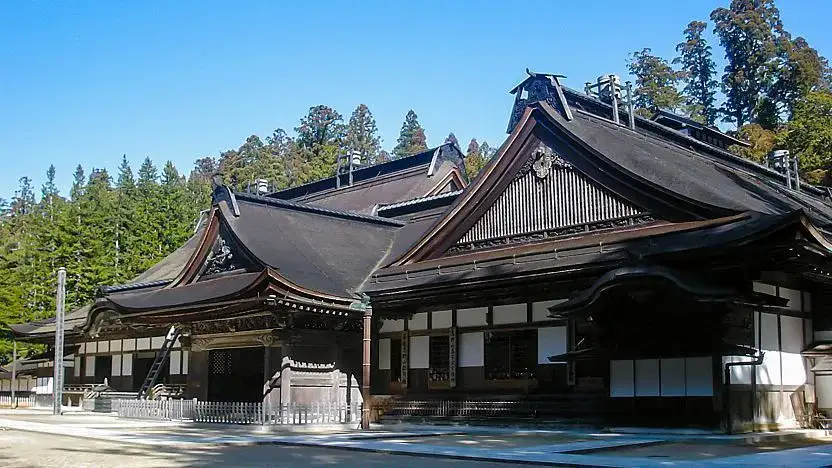
Kongobuji (金剛峯寺, Kongōbuji) was originally built in 1593 by Toyotomi Hideyoshi in memory of his mother. Later it merged with a neighboring temple and became the head temple of Shingon Buddhism, a sect introduced to Japan by Kobo Daishi in 805 and based on Mount Koya.
After removing shoes and paying the admission fee, visitors first enter the Ohiroma Room, used for important rituals and ceremonies. Its gilded sliding doors (fusuma) feature cranes painted by Kano Tanyu. Adjacent are the Plum and Willow Rooms, named after their painted sliding doors. Toyotomi Hidetsugu performed ritual suicide in the Willow Room on orders from his uncle Hideyoshi.
A long corridor leads to a newer wing where guests can enjoy tea and a cookie in a large tatami hall. An adjacent building has sliding doors decorated with 20th-century paintings of seasonal flowers and the story of Kobo Daishi—his journey to China and founding of Koyasan. Behind is the Banryutei Rock Garden, Japan's largest rock garden, built in 1984. Its large rocks from Shikoku, Kobo Daishi's birthplace, depict a pair of dragons emerging from a sea of clouds.
Returning to the main building, visitors pass the extravagant Jodannoma Audience Room, used for receiving dignitaries. Its walls and sliding doors are gilded in gold, and the ceilings feature carved flowers. The tour ends in Kongobuji's kitchen, with its enormous hearth and kamado stoves large enough to feed up to 2,000 people.
Visitor information
Practical details to check before planning this stop.
- Hours
- 8:30 to 17:00 (entry until 16:30)
- Closed
- No closing days
- Admission
- 1000 yen (~$6.4) (Kongobuji only)
- English name
- Koyasan Shingon Buddhism
- Original name
- Kongobuji Temple
Verify details before visiting. Currency conversion is indicative and may vary over time.