
What to know
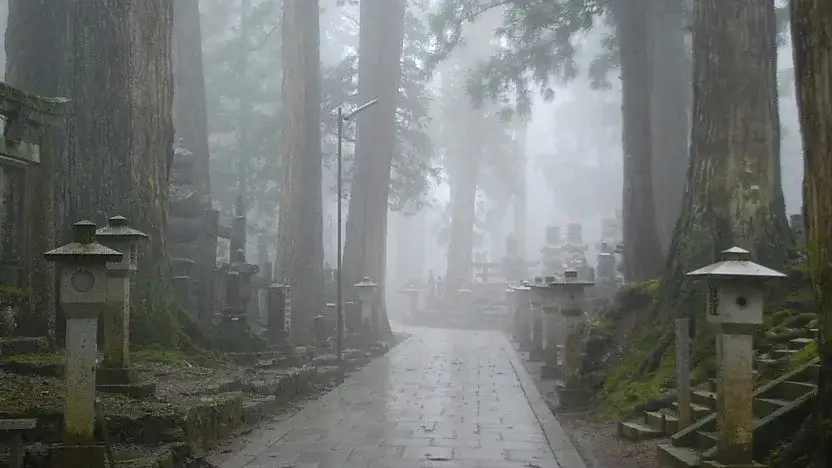
Okunoin (奥の院) is the mausoleum of Kobo Daishi (also known as Kukai), the founder of Shingon Buddhism and one of Japan's most revered religious figures. Rather than having died, Kobo Daishi is believed to rest in eternal meditation, awaiting Miroku Nyorai (Maitreya), the Buddha of the Future, while offering solace to those who seek salvation. Okunoin is one of Japan's holiest sites and a popular pilgrimage destination. Visitors are expected to behave respectfully and dress appropriately.
The Ichinohashi Bridge (first bridge) marks the traditional entrance to Okunoin, and visitors should bow to pay respect to Kobo Daishi before crossing. Beyond the bridge begins Okunoin's cemetery, the largest in Japan, with over 200,000 tombstones lining the nearly two-kilometer path to Kobo Daishi's mausoleum. Wishing to be close to Kobo Daishi in death to receive salvation, many people—including prominent monks and feudal lords—have had their tombstones erected here over the centuries.
A second, shorter approach to Okunoin, used by most visitors today, starts at the Okunoin-mae bus stop and cuts the walk to the mausoleum in half (to just under a kilometer). This alternative route passes through a more recent section of the cemetery with modern tombstones from individuals, associations, and companies, including some surprising ones, such as a pest control company's memorial to all the termites their products have exterminated.
Whichever approach you choose, both paths meet at the Gokusho Offering Hall, near a row of statues depicting Jizo, a popular Bodhisattva who protects children, travelers, and the souls of the deceased. Visitors make offerings and throw water on the statues, known as Mizumuke Jizo (Water Covered Jizo), to pray for departed family members.
The Gobyobashi Bridge crosses a stream behind the Mizumuke Jizo, separating the innermost temple grounds from the rest of Okunoin. Visitors should bow again to Kobo Daishi before crossing; photography, food, and drink are forbidden beyond this point. To the left of the bridge, a group of wooden markers placed in the stream serves as a memorial to unborn children.
A few meters past the bridge on the left side of the path lies the Miroku Stone, housed in a small cage. Visitors are challenged to lift the stone from the cage's lower platform to an upper platform using only one hand. It is believed that the stone feels lighter to good people and heavier to bad people, and that it can provide a connection to the Miroku Bodhisattva.
Visitor information
Practical details to check before planning this stop.
- Hours
- 6:00 to 17:00
- Closed
- No closing days
- Admission
- Free
- English name
- Original name
- Okunoin Temple
Verify details before visiting. Currency conversion is indicative and may vary over time.