
What to know
The Kunisaki Peninsula is dominated by Mount Futago (721 m) at its center, with valleys radiating outward. The peaceful countryside is dotted with dozens of temples and shrines. Historically divided into six areas, it was called Rokugo Manzan (六郷満山), meaning "Six Towns Full Mountain."
The unique local religious culture of Rokugo Manzan blends Buddhism, Shinto, and mountain worship, centered on the peninsula's many temples and Usa Shrine. A notable feature is the abundance of stone statues of Buddhas, deities, and guardians.
Near the summit of Mount Futago lies Futagoji (両子寺), a major temple with over 1,300 years of history. Its grounds spread across forested slopes, connected by gravel paths and stairs leading to halls housing various deities.
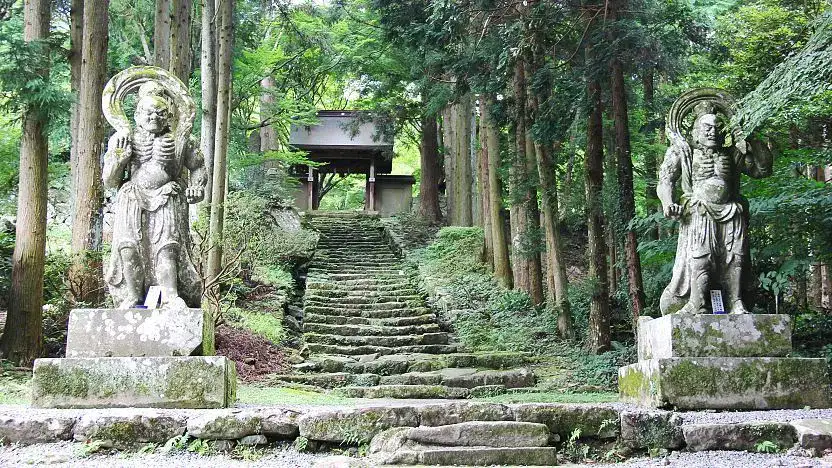
A pair of stone Nio Guardians marks the start of the traditional approach below the parking lot. A ten-minute climb up steps brings you to the main buildings, including Gomado Hall (dedicated to Fudomyoo) and Okunoin Hall (enshrining the thousand-armed Kannon). Adventurous visitors can follow a challenging path beyond the temple to see natural rock formations like narrow openings.
About 15 km southwest of Futagoji, Fukiji Temple (富貴寺) features a main hall that is a designated National Treasure. It is the oldest wooden structure in Kyushu, dating to the late Heian Period (794–1185). The simple, elegant building sits serenely against a backdrop of trees and is widely featured in Rokugo Manzan brochures.
Fukiji is dedicated to Amida Buddha, and its main hall houses an intricate wooden statue of the deity. The hall is ranked among Japan's top three Amida Buddha halls, alongside Byodoin's Hoodo and Chusonji's Konjikido.
Visitor information
Practical details to check before planning this stop.
- Hours
- 8:30 to 16:30 (entry until 16:00)
- Closed
- No closing days
- Admission
- 300 yen (~$1.92)
- English name
- Makiodo
- Original name
- Rokugo Manzan Temples
Verify details before visiting. Currency conversion is indicative and may vary over time.