
What to know
The Kamo Shrines—Shimogamo Shrine and Kamigamo Shrine—are both UNESCO World Heritage Sites. They rank among Kyoto's most significant and ancient shrines.
In fact, the Kamo Shrines predate Kyoto's establishment as the national capital in 794. Throughout the millennium that Kyoto served as Japan's capital, the Imperial Court patronized these shrines as guardians of the city's protection and prosperity.
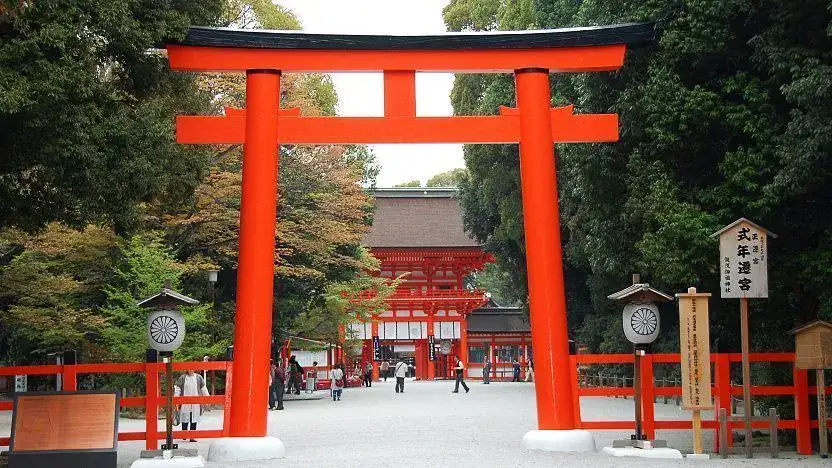
Shimogamo Shrine (下鴨神社, Shimogamo Jinja, "Lower Kamo Shrine") sits at the confluence of the Takano and Kamo rivers. It is enveloped by Tadasu no Mori, a primeval forest preserved for centuries, home to trees up to 600 years old.
Kamigamo Shrine (上賀茂神社, Kamigamo Jinja, "Upper Kamo Shrine") lies about three and a half kilometers upstream from Shimogamo. Its grounds feature two sand cones used for purification, a ritual maintained since ancient times.
Together, the Kamo Shrines host the Aoi Matsuri, one of Kyoto's three major festivals. Every year on May 15 at 10:30am, a grand procession in traditional imperial court attire departs from the Imperial Palace, proceeds to Shimogamo, and concludes at Kamigamo. Both shrines also hold other smaller festivals throughout the year.
Shimogamo Shrine is a 15-minute walk from Demachi-Yanagi Station on the Keihan Line. Alternatively, take Kyoto City Bus number 4 bound for Kamigamojinja-mae from the station to Shimogamojinja-mae bus stop (5 minutes, 230 yen), which stops right beside the shrine.
Visitor information
Practical details to check before planning this stop.
- Hours
- 6:00 to 17:00
- Closed
- No closing days
- Admission
- Free
- English name
- Shimogamo Shrine
- Original name
- Kamo Shrines
Verify details before visiting. Currency conversion is indicative and may vary over time.