
What to know
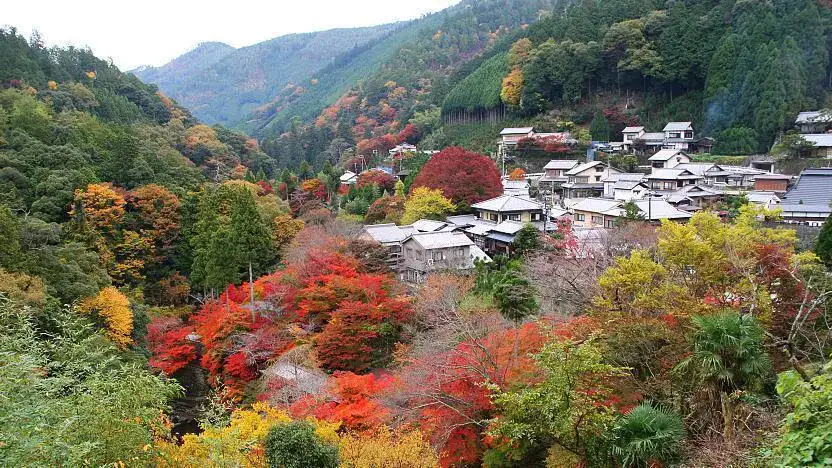
Takao (高雄) is a sparsely populated mountainous area with three historic temples along a forested valley, about an hour by bus north of central Kyoto. Worth visiting year-round, it is most popular during autumn foliage season, which typically peaks around mid-November.
Kozanji Temple dates back to 774 and is a UNESCO World Heritage Site. Inside, visitors can see what is considered Japan's first manga—a scroll depicting animals satirizing Heian court life. Kozanji is also recognized as the birthplace of tea cultivation in Japan, and the original tea plantation has been restored for visitors.
Jingoji Temple is the most visited of Takao's temples. A long stone staircase provides an impressive but tiring approach. The grounds feature a large entrance gate, several halls, and a path to an observation point with valley views. Small clay discs with inscriptions can be purchased and thrown into the valley for good luck.
Saimyoji Temple was originally built as a detached temple of Jingoji. Though smaller and less grand, it is still interesting. The vermilion Shigetsukyo Bridge, crossing a river to the temple entrance, is a particularly famous sight.
Takao is connected to central Kyoto by local JR buses and Kyoto City Bus.
JR buses for Takao depart from Kyoto Station every 20 to 30 minutes, cost 230 yen one way, and take 50 minutes. They can also be boarded at stops along the way, including JR Nijo Station and Ninnaji. These buses are covered by the Japan Rail Pass, JR Kansai Area Pass, JR Kansai Wide Area Pass, and several other JR West passes.
Visitor information
Practical details to check before planning this stop.
- Hours
- 9:00 to 16:00
- Closed
- No closing days
- Admission
- 1000 yen (~$6.4)
- English name
- Takao Hoshokai
- Original name
- Takao
Verify details before visiting. Currency conversion is indicative and may vary over time.