
What to know
Sanzenin Temple (三千院) is the highlight of the quiet village of Ohara, about an hour north of central Kyoto. The path from the Ohara bus stop to the temple is lined with shops and eateries catering to visitors, and several smaller temples are nearby. The temple boasts expansive grounds with various buildings, gardens, and walking trails.
Sanzenin belongs to the Tendai sect of Japanese Buddhism and was founded by the revered monk Saicho, who introduced Tendai Buddhism to Japan in 804. It is one of the few temples whose head priests were once members of the imperial family.
Upon entering, visitors pass through a series of connected buildings. The first major one is the Kyakuden (guest hall), featuring calligraphy and paintings on sliding doors (fusuma). It opens onto the Shuhekien Garden, a traditional Japanese garden with a small pond and hill.
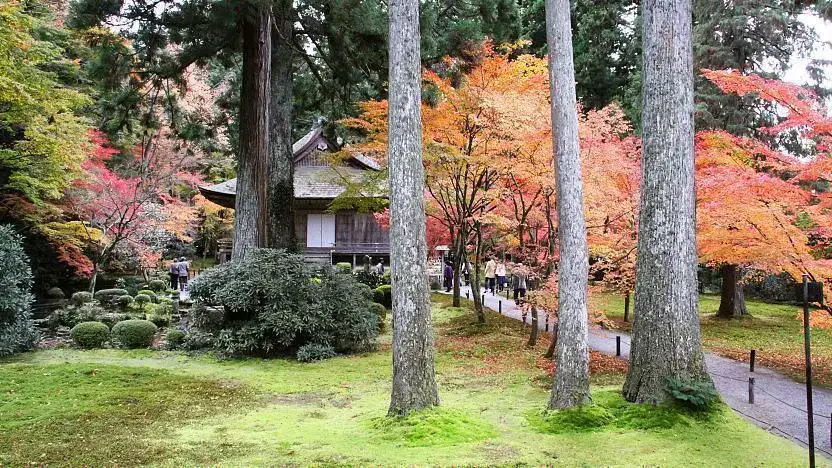
Connected by a corridor, the Shinden (main hall) houses statues of three Buddhist deities: Amida Buddha flanked by Kannon and Fudo Myoo. From here, visitors enjoy the iconic view of the Ojo Gokuraku-in Hall framed by maple and cedar trees across a moss garden.
After admiring the view, visitors stroll through the moss garden, where a peaceful atmosphere prevails and charming stone statues peek out from the moss. The garden, like the rest of the temple, is especially stunning during autumn colors, typically peaking in mid-November, about a week earlier than in central Kyoto.
In the middle of the moss garden stands the Ojo Gokuraku-in Hall, the oldest building at Sanzenin. Originally built in 985 and last rebuilt in 1143, it houses a statue of Amida Buddha, the temple's most treasured artifact, accompanied by Kannon and Seishi.
Visitor information
Practical details to check before planning this stop.
- Hours
- 9:00 to 17:00 (March to October)
- Closed
- No closing days
- Admission
- 700 yen (~$4.48)
- English name
- Sanzenin Temple
- Original name
- Sanzenin Temple
Verify details before visiting. Currency conversion is indicative and may vary over time.