
What to know
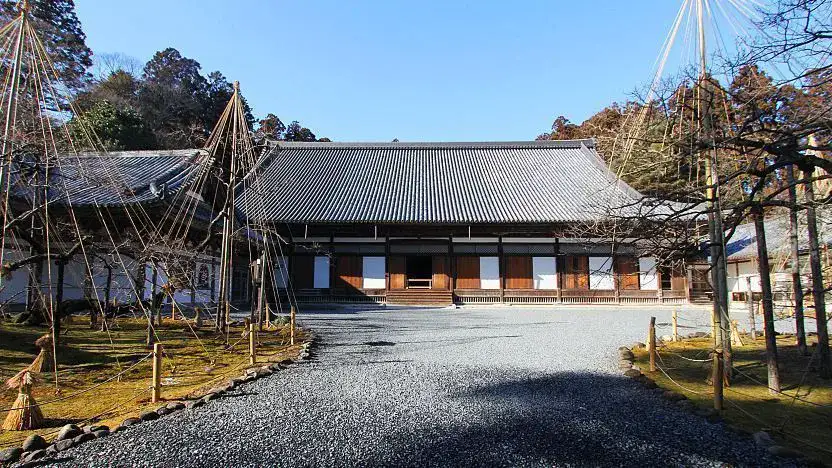
Zuiganji (瑞巌寺) is one of the Tohoku Region's most celebrated Zen temples, renowned for its exquisite gilded and painted sliding doors (fusuma). Founded in 828 as a Tendai sect temple, it was converted to Zen during the Kamakura Period (1192–1333). After a period of decline, feudal lord Date Masamune restored it to prominence, rebuilding it as his family temple in 1609.
The path to the main hall is a long, straight avenue lined with cedar trees—many of which were damaged by the 2011 tsunami's saltwater and had to be removed. An alternate route branches off to the right, passing several caves once used for meditation and now housing statues.
At the end of the approach stands the Main Hall, which visitors can enter to follow a circular route through rooms adorned with celebrated paintings on sliding doors. Attached is the Kuri, the Zen kitchen where meals were historically prepared. Both buildings are designated National Treasures.
Across from the Kuri is the Seiryuden, also known as the Zuiganji Art Museum. It displays temple treasures, including golden sliding doors and artifacts of the Date Clan, such as a life-sized wooden statue of Date Masamune in armor.
Zuiganji is a short walk from the Matsushima pier and a 5–10 minute walk from JR Matsushima Kaigan Station.
How to get to and around Matsushima
Visitor information
Practical details to check before planning this stop.
- Hours
- 8:30 to 17:00 (April to September)
- Closed
- No closing days
- Admission
- 700 yen (~$4.48) (includes entrance to the museum)
- English name
- Zuiganji
- Original name
- Zuiganji Temple
Verify details before visiting. Currency conversion is indicative and may vary over time.