
What to know
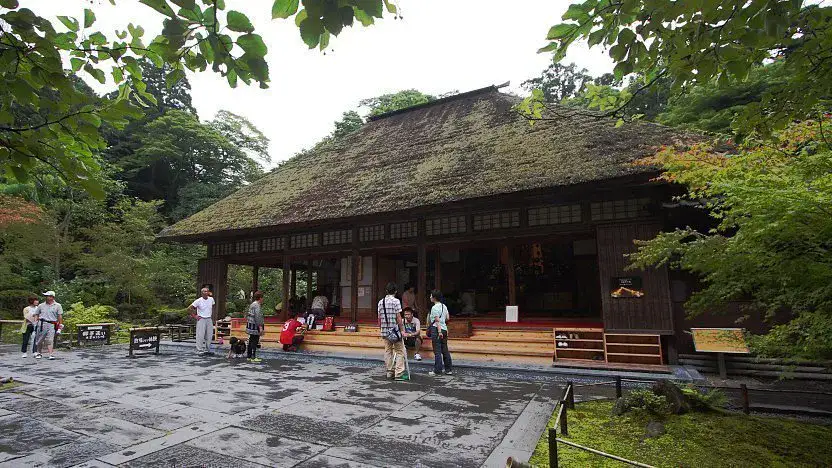
Entsuin Temple (円通院, Entsūin) was built in 1647 next to Matsushima's most important temple, Zuiganji Temple, to house the mausoleum of Date Mitsumune, the son of the ruling local feudal lord Date Terumune. The temple was built in mourning and is devoted to Kannon, the Buddhist goddess of mercy, as Mitsumune died an untimely death at the age of 19.
Back in the grounds stands the mausoleum, which houses a statue of the young lord on a white horse surrounded by his most devoted followers, who committed ritual suicide upon his death. The mausoleum's interior is decorated in gold leaf and ornate paintings, which include small Western symbols of spades, hearts, diamonds, clubs, crosses and the oldest Japanese image of a rose. These symbols were included into the design, as the Date Clan had an interest in Christianity and Western technology and recently had sent envoys to the Pope in Rome.
Entsuin's main hall was originally Mitsumune's summer residence in Edo (now Tokyo) before his death, and was relocated to Matsushima by his father, who surrounded the structure with gardens and renamed it Daihitei, meaning "mercy" in Japanese.
Of the two gardens near the main hall, the first is a Japanese-style moss and maple garden with a heart shaped pond, while the second is a Western-style rose garden influenced by paintings from inside the mausoleum. Additionally, there is a moss and rock garden near the temple's entrance, as well as a cedar grove for meditation at the back of the temple grounds.
Entsuin is next to Zuiganji Temple and a five minute walk from JR Matsushima Kaigan Station.
How to get to and around Matsushima
Visitor information
Practical details to check before planning this stop.
- Hours
- 9:00 to 16:00 (until 15:30 from December to March)
- Closed
- No closing days
- Admission
- 500 yen (~$3.2)
- English name
- Original name
- Entsuin Temple
Verify details before visiting. Currency conversion is indicative and may vary over time.