
What to know
Nagasaki Confucius Shrine (Kōshi-byō) is one of the few shrines in Japan dedicated to the Chinese philosopher Confucius. Built in 1893 by Nagasaki's Chinese community, the colorful shrine also houses a museum at the rear of the grounds.
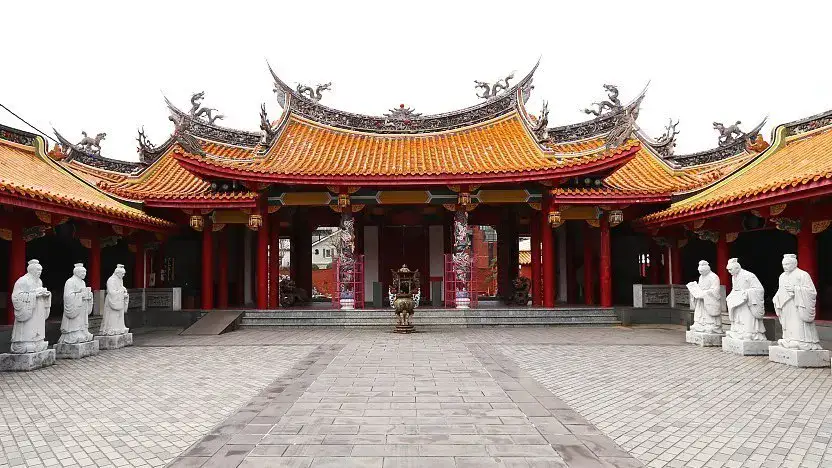
A small garden with a bridge and pond greets visitors at the entrance. The ornate Chinese-style buildings feature yellow roofs. Flanking the shrine's courtyard are the 72 sages—life-size stone statues weighing about two tons each, depicting Confucius' disciples. Visitors are encouraged to find a statue that resembles a relative.
In the center of the complex stands the main hall, dating back to the shrine's construction. It is a fine example of Chinese architectural techniques and houses a seated statue of Confucius.
At the rear is the Historical Museum of China, built in 1983 to celebrate the shrine's 90th anniversary and promote Japan-China friendship. The museum displays artifacts from China, including pottery, sculptures, and other artworks. The third floor features artwork and documents related to the shrine.
The Confucius Shrine is a short walk from the Ouratenshudo tram stop on line 5, at the foot of the Dutch Slope.
Visitor information
Practical details to check before planning this stop.
- Hours
- 9:30 to 18:00 (entry until 17:30)
- Closed
- No closing days.
- Admission
- 660 yen (~$4.22) (includes admission to the museum)
- English name
- Original name
- Nagasaki Confucius Shrine
Verify details before visiting. Currency conversion is indicative and may vary over time.