
What to know
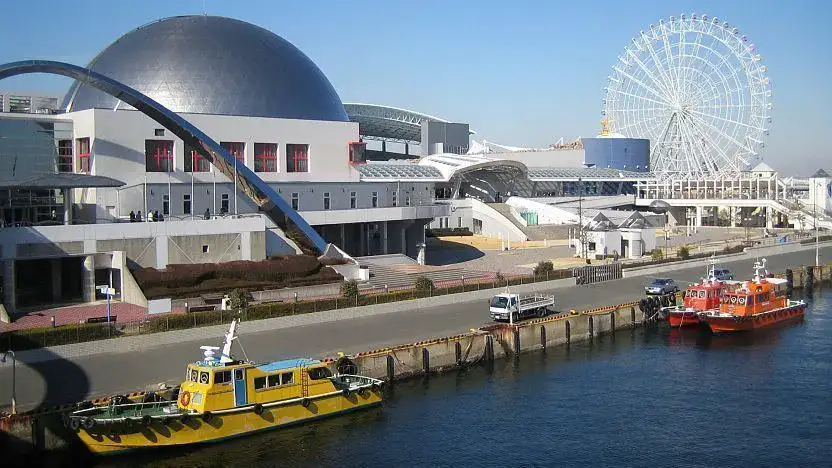
Nagoya Port (名古屋港, Nagoyakō), located south of Nagoya's city center, is one of Japan's largest ports. The Garden Pier area has been redeveloped into a leisure district featuring an aquarium, shopping mall, amusement park, museums, and green spaces.
The port area is easily accessible from central Nagoya via subway.
The Port of Nagoya Public Aquarium is one of Japan's largest and best aquariums. Spread across two buildings, it showcases marine mammals such as dolphins, orcas, and beluga whales, along with other sea creatures from five aquatic regions between Japan and the Antarctic Ocean. Besides feeding and training sessions, three daily dolphin shows are especially popular with visitors.
Moored in the harbor is the Fuji Icebreaker, a ship used by Japan to explore the Antarctic Ocean from the 1960s to the 1980s. It is now open to the public as the Antarctic Museum. Directly in front of the bridge to the aquarium stands the Nagoya Port Building, which houses a 53-meter-high observatory and the Nagoya Maritime Museum. For the young at heart, Nagoya Port Sea Train Land offers an amusement park with the largest ferris wheel in the Chubu Region, located north of the aquarium.
Nagoya Port is best accessed via the Meiko Subway Line. The attractions are within walking distance of Nagoyako Station, the line's terminal.
From Nagoya Station, the fastest route is to take a JR train to Kanayama Station (3 minutes, 180 yen) and transfer to the Meiko Subway Line for Nagoyako Station (10 minutes, 240 yen). A cheaper but slower option is to take the Higashiyama and Meijo/Meiko Subway Lines via Sakae (25 minutes, 270 yen).
Visitor information
Practical details to check before planning this stop.
- Hours
- 9:30 to 17:30 (mid-March through November)
- Closed
- Mondays (or the following day if Monday is a national holiday)
- Admission
- 2030 yen (~$12.99) (aquarium only)
- English name
- Port of Nagoya Public Aquarium
- Original name
- Nagoya Port
Verify details before visiting. Currency conversion is indicative and may vary over time.