
What to know
Myojoji Temple (妙成寺, Myōjōji) is the head temple of the Nichiren sect in the Hokuriku region, which covers northern Chubu. Founded in 1294 by Saint Nichizo, a direct disciple of Nichiren, the temple sits atop a hill with a sprawling complex of buildings.
Most of the current structures date from the 17th century, with the oldest—the priest's living quarters—built in 1593. The Maeda clan, rulers of the Kaga domain (modern Ishikawa Prefecture) and second only to the Tokugawa in wealth, sponsored the temple's construction.
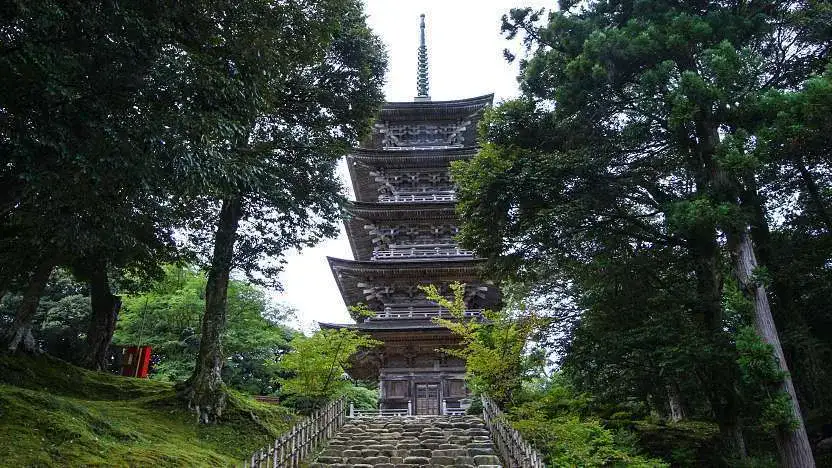
The temple's most iconic feature is its five-storied pagoda, built in 1618 and standing nearly 35 meters tall. It is visible from afar as you approach the grounds. To the right of the steps leading up to the pagoda stands a statue of Nichizo, the founder.
The main gate, dating to 1625, houses statues of the Buddha's guardian deities. The Hondo (main hall), near the complex center, was built in 1614. Behind the temple, near the pagoda, lie several small graveyards. The grounds also feature a pleasant garden with a view of the five-storied pagoda framed by tree branches.
Myojoji is accessible by bus from Hakui Station on the JR Nanao Line (55 minutes and 830 yen from Kanazawa, or 45 minutes and 590 yen from Wakura Onsen). From Hakui Station, take a bus bound for Takahama or Togi and get off at Mōjōji-guchi (妙成寺口, 20 minutes, 440 yen, hourly departures). The temple is about a ten-minute walk from the bus stop.
How to get to and around the Noto Peninsula
Visitor information
Practical details to check before planning this stop.
- Hours
- 8:00 to 17:00 (until 16:30 from November to March)
- Closed
- No closing days
- Admission
- 500 yen (~$3.2)
- English name
- Myojoji Temple
- Original name
- Myojoji Temple
Verify details before visiting. Currency conversion is indicative and may vary over time.