
What to know
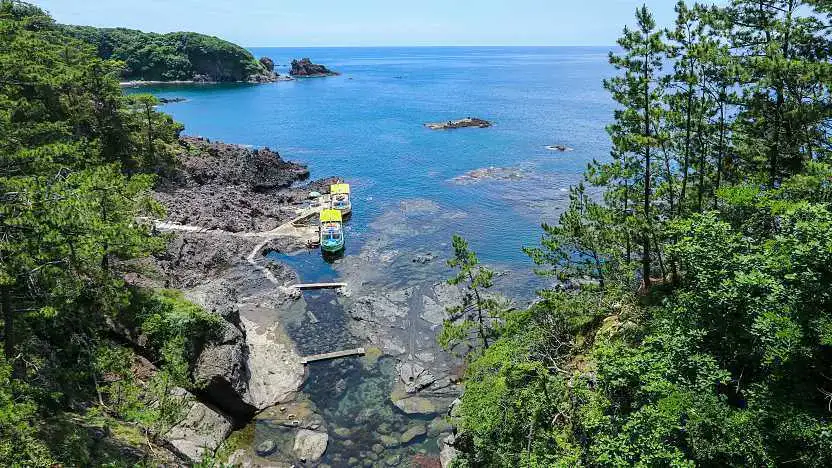
The Noto Kongo Coast (Noto Kongo Kaigan) stretches about 14 kilometers along the Sea of Japan on the western edge of the Noto Peninsula. Exposed to the rough sea, this coastline has developed a strikingly rugged landscape, often considered the most dramatic section of the peninsula's popular coastal scenery.
The most famous spot along the Noto Kongo Coast is the Ganmon rock formation. Ganmon means "Gate Rock," and the hole eroded through the middle of the rock indeed resembles a gate. Visitors can walk down to the rock and enter a cave beside the gate. Legend has it that Minamoto Yoshitsune hid in the caves around Ganmon Rock while fleeing from his brother Minamoto Yoritomo, the founder of the Kamakura Shogunate.
Ganmon Rock attracts many visitors and features an information center, shops, and a parking lot. There are 20-minute tour boat rides that pass by Ganmon Rock and other minor sites along the coast, with explanations provided in Japanese.
About three kilometers north of Ganmon Rock are two more rocks known as Hatago Iwa. These rocks are considered sacred and are connected by a shimenawa, a rope used in Shinto to mark the presence of sacred spirits. Because Hatago Iwa closely resembles the Meoto Iwa (Wedded Rocks) near Futami on the Shima Peninsula, they are also called Noto Futami.
A rental car is recommended to access Ganmon Rock and Hatago Iwa, as public transportation is virtually nonexistent.
How to get to and around the Noto Peninsula
Visitor information
Practical details to check before planning this stop.
- Hours
- 9:00 to 16:00
- Closed
- Mid November to mid March
- Admission
- 1200 yen (~$7.68)
- English name
- Original name
- Noto Kongo Coast
Verify details before visiting. Currency conversion is indicative and may vary over time.