
What to know
Sojiji Temple (總持寺, Sōjiji) on the Noto Peninsula was once among the most influential Zen Buddhist temples in Japan, though its prominence later declined.
Founded in 1321, Sojiji received imperial patronage from Emperor Go-Daigo. Along with Eiheiji Temple in Fukui Prefecture, it served as one of the two head temples of the Soto sect, a major Zen Buddhist school, at one time overseeing over 16,000 temples nationwide. A devastating fire in 1898 led to the transfer of its head temple functions to Sojiji Temple in Yokohama. However, some original buildings survived, and many destroyed structures were later rebuilt.
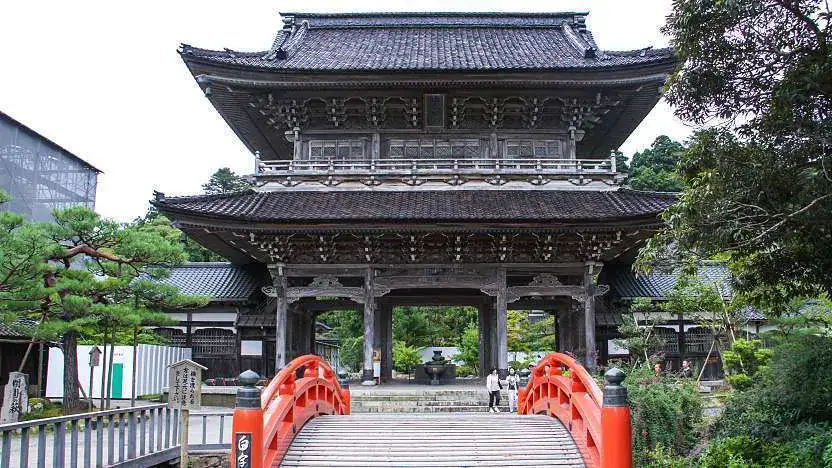
Entering the temple grounds, visitors first pass the Kyozo, a repository for Buddhist scriptures. Then they cross the Hakuji Bridge, leading to the Sanmon Gate, the temple's main gate. Standing about 17 meters tall, the Sanmon Gate dates from 1932.
Beyond the gate lies the main temple area, where buildings surround an inner courtyard featuring a small pond and garden. A circular route takes visitors through key structures, including the Butsuden (main hall) and the Sodo (meditation hall), both built in the early 20th century. Another notable building is the Hatto, which houses a statue of the temple's founder.
Sojiji Temple is a short walk from the Monzen Sojiji-mae (門前総持寺前) bus stop, the final stop for buses from Wajima (35 minutes, 760 yen, every 2-3 hours) and Anamizu (35 minutes, 690 yen, every 1-3 hours), which is the last station on the Noto Railway.
How to get to and around the Noto Peninsula
Visitor information
Practical details to check before planning this stop.
- Hours
- 8:00 to 17:00
- Closed
- No closing days
- Admission
- 500 yen (~$3.2)
- English name
- Sojiji Temple
- Original name
- Sojiji Temple
Verify details before visiting. Currency conversion is indicative and may vary over time.