
What to know
Onagawa (女川) is a small fishing town on the Sanriku Coast, famous for its abundant seafood including oysters, scallops, Pacific saury, and salmon. Located at the mouth of Onagawa Bay, the town was devastated by the 2011 tsunami, which claimed about an eighth of its population and destroyed over half of its buildings.
Extensive reconstruction has been underway, with buildings relocated inland and the entire town center raised by more than five meters. The train station and its shopping promenade have been completed, along with a waterfront memorial park built around a former police station that was overturned by the tsunami, serving as a reminder of the disaster.
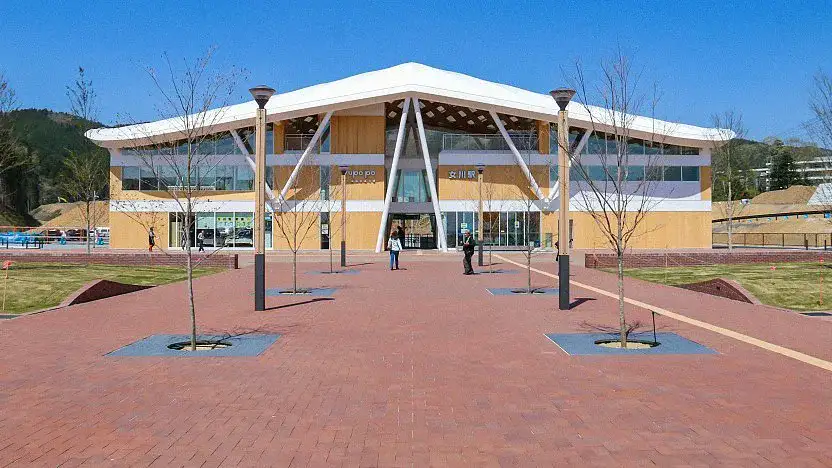
Completed in 2015, four years after the disaster, Onagawa Station has become a new symbol of the town. Designed by architect Shigeru Ban, known for his work in disaster-hit areas, the station houses a public bath called Onagawa Yupoppo on the second floor. A free foot bath and a sheltered rest area are also available at the station entrance.
A brick promenade, Seapal Pier Onagawa, leads from the station to the waterfront, lined with shops, restaurants, and a small fish market called Hama Terrace near the water. The spacious layout and consistent design resemble an outlet mall, but instead of discount-branded apparel, visitors can buy local handicrafts and produce, as well as enjoy local dishes and seafood.
From Ishinomaki Station (80–90 minutes, 910 yen from Sendai), take the JR Ishinomaki Line to Onagawa (about 25 minutes, 350 yen one way, one train every 1–2 hours). The trip is covered by the Japan Rail Pass and other JR passes that cover the Tohoku Region.
How to get to and around the Sanriku Coast
Visitor information
Practical details to check before planning this stop.
- Hours
- 9:00 to 21:00 (entry until 20:30).
- Closed
- Third Wednesday of each month (or next day if that Wednesday is a national holiday)
- Admission
- 500 yen (~$3.2)
- English name
- Original name
- Onagawa
Verify details before visiting. Currency conversion is indicative and may vary over time.