
What to know
Shinjuku Gyoen (新宿御苑) is one of Tokyo's largest and most beloved parks. Just a short walk from Shinjuku Station, it offers spacious lawns, winding paths, and peaceful scenery—a perfect escape from the bustling city. In spring, it becomes one of Tokyo's top cherry blossom viewing spots.
The park began in the Edo Period (1603–1868) as a feudal lord's residence in Tokyo. Later turned into a botanical garden, it was given to the Imperial Family in 1903 for recreation and entertaining guests. Almost completely destroyed in World War II, it was rebuilt and reopened as a public park in 1949.
Shinjuku Gyoen features three distinct garden styles:
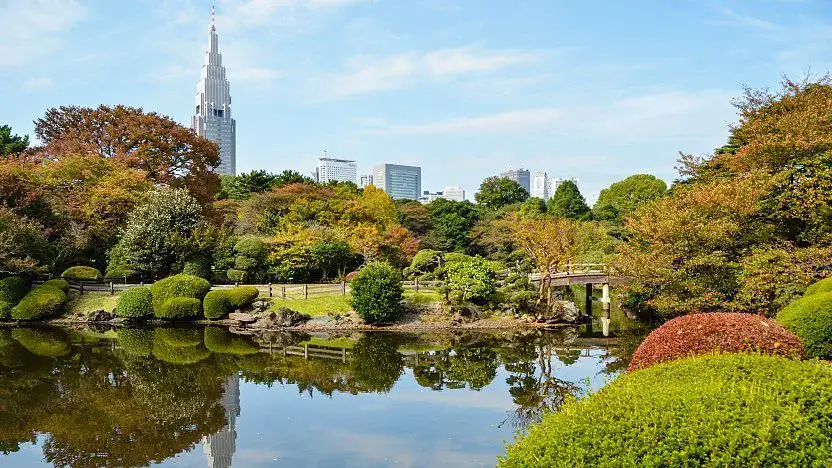
The traditional Japanese landscape garden has large ponds with islands and bridges, surrounded by manicured shrubs, trees, pavilions, and the Kyu Goryotei (Taiwan Pavilion), built for the Showa Emperor's wedding. A chrysanthemum exhibit takes place in the first two weeks of November.
Other main gardens include a symmetrical French formal garden and an English-style landscape garden with wide lawns bordered by flowering cherry trees. The rest of the park has forested areas, lawns, a restaurant, an information center, an art gallery, and a greenhouse with tropical and subtropical flowers.
Shinjuku Gyoen boasts over a dozen cherry tree varieties. From late March to early April, more than 400 Somei Yoshino trees bloom around the English garden, making it one of Tokyo's most popular hanami spots. Early and late blooming trees extend the cherry blossom season for those who miss the peak.
Visitor information
Practical details to check before planning this stop.
- Hours
- 9:00 to 18:00 (March 15 to June 30 and August 21 to September 30)
- Closed
- Mondays (or following day if Monday is a national holiday), December 29 to January 3. There are no closing days during the cherry blossom season (March 25 to April 24) and the Chr
- Admission
- 500 yen (~$3.2)
- English name
- Shinjuku Gyoen
- Original name
- Shinjuku Gyoen
Verify details before visiting. Currency conversion is indicative and may vary over time.