
What to know
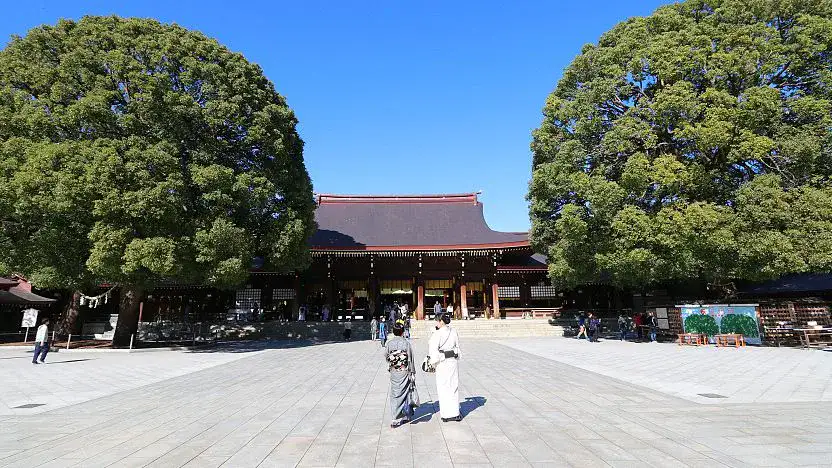
Meiji Shrine (Meiji Jingū) is a Shinto shrine honoring the spirits of Emperor Meiji and Empress Shoken. Tucked away near the bustling Harajuku Station on the JR Yamanote Line, the shrine and adjacent Yoyogi Park form a vast wooded oasis in central Tokyo. Walking paths wind through the forest, offering a peaceful escape from the city's concrete.
Completed in 1920, eight years after the emperor's death and six years after the empress's, the shrine was built to commemorate their legacies. It was destroyed during World War II but quickly rebuilt afterward.
Emperor Meiji, born in 1852, ascended the throne in 1867 at the height of the Meiji Restoration. This period ended Japan's feudal era and restored imperial power, propelling the country into modernization. By the time he died in 1912, Japan had become a major world power.
The main shrine complex is a ten-minute walk from both the southern entrance near Harajuku Station and the northern entrance near Yoyogi Station. A massive torii gate marks the entry, and beyond it, the city's noise fades into serene forest. The roughly 100,000 trees were planted during construction, donated from all over Japan.
In the heart of the woods, the shrine buildings exude tranquility. Visitors can participate in typical Shinto practices: making offerings at the main hall, buying charms and amulets, or writing wishes on wooden ema plaques.
Meiji Shrine is one of Japan's most visited shrines. During the first days of the New Year, it welcomes over three million visitors for hatsumode (first prayers), more than any other shrine or temple in the country. Throughout the year, traditional Shinto weddings are frequently held here.
Visitor information
Practical details to check before planning this stop.
- Hours
- Sunrise to sunset
- Closed
- No closing days
- Admission
- Free
- English name
- Meiji Shrine
- Original name
- Meiji Shrine
Verify details before visiting. Currency conversion is indicative and may vary over time.