
What to know
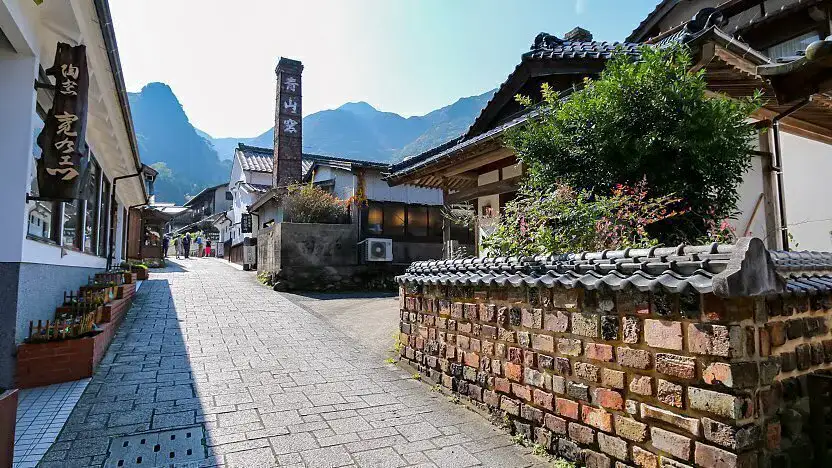
Okawachiyama (大川内山, Ōkawachiyama) is a small, isolated mountain village just outside central Imari. Along with Arita in the neighboring valley, it was one of the first places in Japan to produce porcelain after kaolin—the essential mineral—was found nearby and skilled craftsmen were brought from Korea.
Porcelain was highly prized by the local ruler for its superior quality compared to contemporary pottery. To protect the technology, the ruling Nabeshima Clan directly controlled production in Okawachiyama, building a well-defended, isolated village that earned the nickname "Village of the Secret Kilns." The pottery produced here became known as Nabeshima-yaki, among the most exclusive porcelain in Japan.
Today, Okawachiyama Village consists mostly of pottery workshops and their storefronts. About 30 of them line the narrow lanes, and several still have tall chimneys. The village is compact and easy to explore on foot. At the entrance, near the Nabeshima Clan Kiln Bridge, the Imari-Arita Ware Traditional Crafts Center displays local ceramics. Next door, a shop also serves as the Imari Nabeshima Ware Exhibition Hall, one of the few places in town where visitors can find food.
Across the river lies a graveyard with a pyramid-shaped monument dedicated to the Korean potters brought to Japan. On the forested slopes above the village, Nabeshima Hanyo Park features ruins of Edo-period stepped kilns alongside modern ceramic art, with nice views over the village.
Okawachiyama Village is located in the mountains just outside central Imari. From Imari Station, a bus runs about every two hours to Okawachiyama (15 minutes, 200 yen one way). A taxi takes about ten minutes and costs around 1,800 yen one way. Energetic walkers can reach the village in about an hour and a half.
How to get to and around Arita and Imari
Visitor information
Practical details to check before planning this stop.
- Hours
- Closed
- Admission
- English name
- Saihi Bus
- Original name
- Okawachiyama Village
Verify details before visiting. Currency conversion is indicative and may vary over time.