
What to know
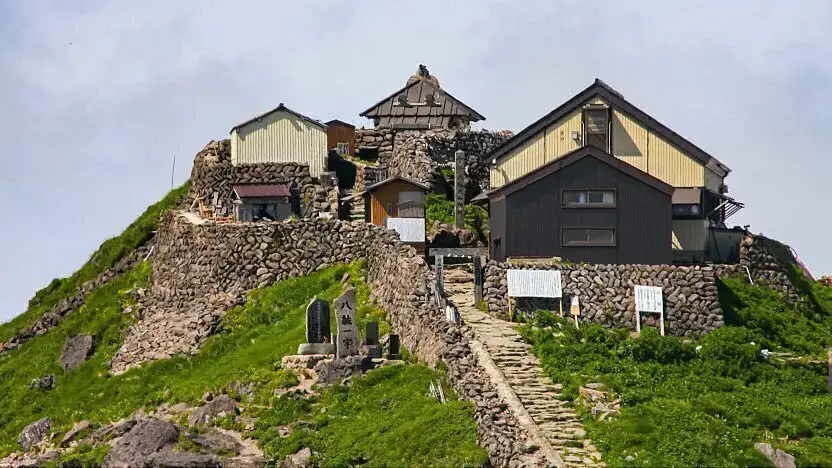
Gas-san (月山) is the tallest of the three Dewa Sanzan peaks. Its summit shrine, perched at 1984 meters, is closed most of the year due to heavy snow and has no road access. Only in summer do hundreds of pilgrims and tourists hike up to this impressive shrine.
The paved road ends at a parking lot at the 8th Station, from where the final five kilometers to the top must be walked. From the summit, pilgrims traditionally descend the other side to Yudono-san. Since Gas-san symbolizes death, it is typically the second shrine visited, after Haguro-san (birth) and before Yudono-san (rebirth).
The hiking trail to Gas-san's peak crosses marshland, wild alpine flower fields, and patches of snow even in midsummer. Though not very steep, the rocky, treeless path can be challenging due to exposure. Rain makes rocks slippery, and there is no shelter from strong wind or sun.
However, the lack of tree cover lets hikers fully enjoy the spectacular mountain scenery during the 2.5 to 3 hour ascent. Rest stations at the top and midway sell water and offer a chance to rest with fellow hikers. The trail descending from Gas-san's summit to Yudono-san is steeper and more demanding, taking about 2.5 hours.
Unlike most Japanese shrines, Gas-san requires visitors to undergo a short purification rite at the entrance. Priests are used to non-Japanese speakers and guide you through the process. After purification, a prayer, a sip of sake, and lighting a candle or incense, you'll feel refreshed enough to continue hiking.
If you want to see Gas-san and enjoy the mountain scenery without hiking all the way to the summit, there is a circular course starting and ending at the 8th station. It winds through marsh and flower fields, takes only about 30 minutes, and offers nice mountain views.
Visitor information
Practical details to check before planning this stop.
- Hours
- Closed
- Mid September to June
- Admission
- 500 yen (~$3.2)
- English name
- Shonai Kotsu
- Original name
- Gas-san
Verify details before visiting. Currency conversion is indicative and may vary over time.