
What to know
For centuries, Koyasan has been a popular pilgrimage destination, connected to the outside world by a network of trails. While most visitors now arrive by cablecar, many of these historic routes remain and are still used by hikers seeking a traditional approach.
The original main route is the Koyasan Choishi Michi trail, starting at Kudoyama Station on the Nankai Koya Line. Stone signposts (choishi) mark the path every few hundred meters, numbered in kanji in descending order from Koyasan. Each marker represents one of the five Buddhist elements: earth, water, fire, air, and void.
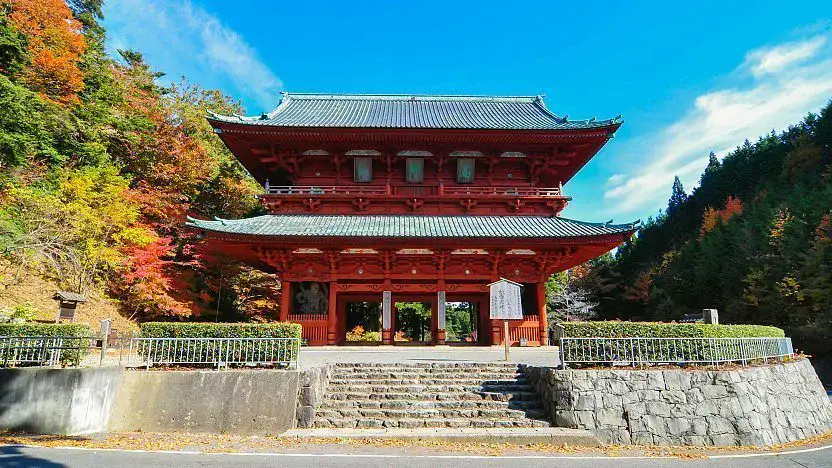
The full Choishi Michi trail is about 23.5 km long and takes around seven hours to hike. You can shorten the trip by starting from Kami-Kosawa or Kii-Hosokawa Stations, saving two or four hours respectively. The trail ends at the Daimon Gate, a two-story crimson gate that is the traditional entrance to Koyasan, though markers continue to the Garan.
A less historic but shorter option is the Fudozaka Trail, leading from Gokurakubashi Station (the lower cablecar station) to Koyasan. This steep, paved path is 2.5 km long and takes about an hour to ascend (less to descend). It ends at the Fudozaka-guchi Nyonindo temple hall.
The Fudozaka-guchi Nyonindo is the only surviving of seven Nyonindo ("woman halls") built around Koyasan's perimeter. Before 1872, women were banned from the temple town, so these halls catered to female visitors. A trail called the Women Pilgrims Course runs from this Nyonindo past the ruins of the others to the entrance of Okunoin, about 7 km and 2.5 hours of hiking.
For a more challenging experience, the Kohechi Trail is part of the Kumano Kodo network, connecting Koyasan to the sacred shrines of Kumano. This long, remote mountain route takes nearly a week to hike and requires proper planning and equipment.
Visitor information
Practical details to check before planning this stop.
- Hours
- Closed
- Admission
- English name
- Koyasan Walking Guide
- Original name
- Pilgrimage Trails
Verify details before visiting. Currency conversion is indicative and may vary over time.