
What to know
During the Edo Period (1603–1868), Kurashiki served as a key regional hub for Japan's most vital commodity: rice. Large quantities of rice from the surrounding area were brought into Kurashiki and stored in its many storehouses before being shipped to Osaka and Edo. Because of the city's importance in the rice trade, Kurashiki was placed under direct control of the shogunate, and the city was even named after its numerous storehouses (kura).
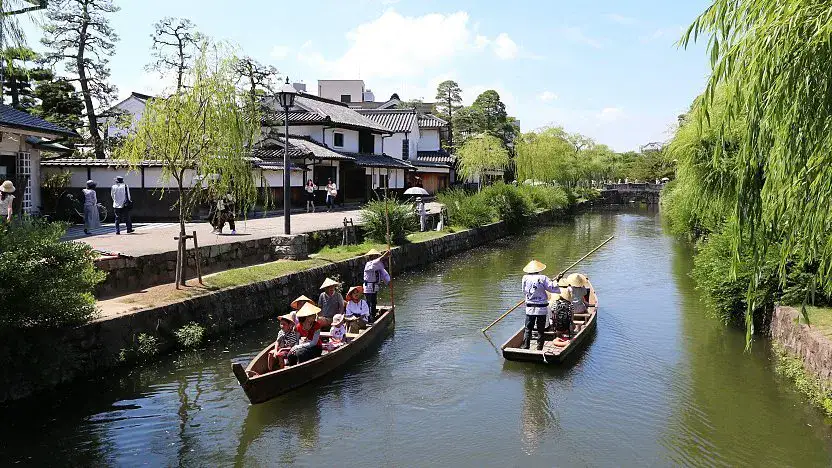
Canals were built to allow boats and barges to navigate between the city's storehouses and the nearby port. A central section of the city's former canal system has been preserved in the Bikan Historical Quarter (倉敷美観地区, Kurashiki Bikan Chiku). The weeping willow trees that line the canal and the stone bridges that cross over the water create a picturesque scene.
Along the canal, many of the original storehouses that were so central to the city's identity remain. Recognizable by their white walls and black tiles, these former storehouses have been converted into cafes, boutiques, souvenir shops, and a number of museums:
Ratings: best of the best best of Japan outstanding
The canal area is a 10–15 minute walk from Kurashiki Station's south exit. A main road, Motomachi-dori, leads south from the station to the canal area, but walking through the parallel shopping arcade is more enjoyable and almost as fast.
Travelers who prefer not to walk from the station can take a bus to the Ohara Bijutsukan bus stop (2 minutes, 170 yen), which is located just beside the Ohara Museum.
Visitor information
Practical details to check before planning this stop.
- Hours
- 9:00 to 17:00 (until 15:00 from December to February)
- Closed
- Mondays (unless Monday is a national holiday), New Year
- Admission
- 2000 yen (~$12.8)
- English name
- Museum of Folkcraft
- Original name
- Canal Area
Verify details before visiting. Currency conversion is indicative and may vary over time.