
What to know
Daigoji (醍醐寺) is a major temple of the Shingon sect of Japanese Buddhism and a UNESCO World Heritage Site. The sprawling complex lies southeast of central Kyoto and covers an entire mountainside. The main temple grounds are at the foot of the mountain, connected by a hiking trail to several more halls near the summit.
Upon entering the main grounds, visitors first encounter Sanboin, the elegant former residence of the head priest, originally built in 1115. The current structure, along with its superb landscape garden, dates to 1598 when it was rebuilt and expanded for Toyotomi Hideyoshi's famous cherry blossom viewing party. The building is a prime example of lavish Momoyama architecture and is not to be missed.
A short walk deeper into the grounds leads to the Shimo Daigo (Lower Daigo) area, where most of the temple's other important buildings stand. Among them is the Kondo Hall (main hall), originally built in 926. The current building was moved to Daigoji in 1599 and houses the temple's main object of worship, a seated statue of Yakushi Buddha.
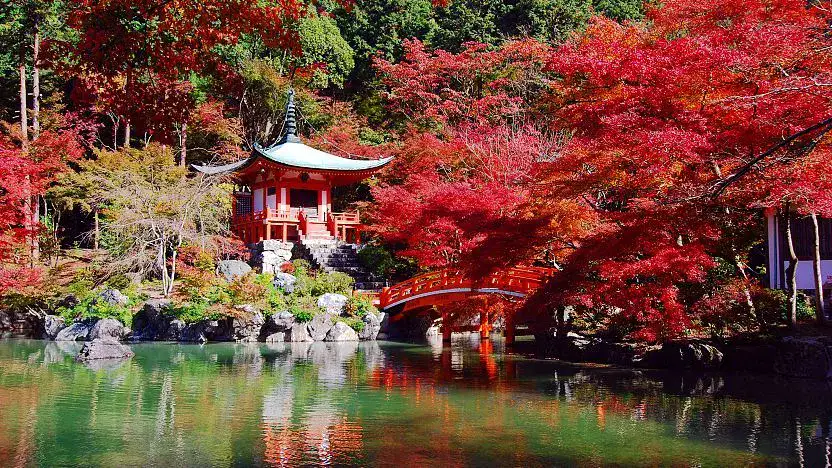
Also in the Shimo Daigo area is a 38-meter-tall, five-storied pagoda, Kyoto's oldest verified building. Built in 951, it is the only structure to survive the fires that have repeatedly devastated Daigoji over the centuries. Finally, there is Bentendo Hall, probably Daigoji's most photographed building, set beside a pond at the far end of the Shimo Daigo area. The hall is especially beautiful amid autumn colors in late November.
Also on the main grounds at the base of the mountain is the Reihokan Museum, an elegant treasure house displaying the temple's large collection of historical objects, including statues, documents, and paintings. Some of the temple's most impressive weeping cherry trees bloom in the museum's garden, usually in early April.
At the far end of the lower grounds, near Bentendo Hall, is the trailhead to Kami Daigo (Upper Daigo), Daigoji's original temple grounds around the summit. The steep forest trail takes about an hour to climb. Those who make the ascent are rewarded with more wooden halls set along the quiet mountainside and views over the plain as far as Osaka on clear days.
Visitor information
Practical details to check before planning this stop.
- Hours
- 9:00 to 17:00 (until 16:30 from early December through February)
- Closed
- No closing days
- Admission
- Regular season:
- English name
- Daigoji Temple
- Original name
- Daigoji Temple
Verify details before visiting. Currency conversion is indicative and may vary over time.