
What to know
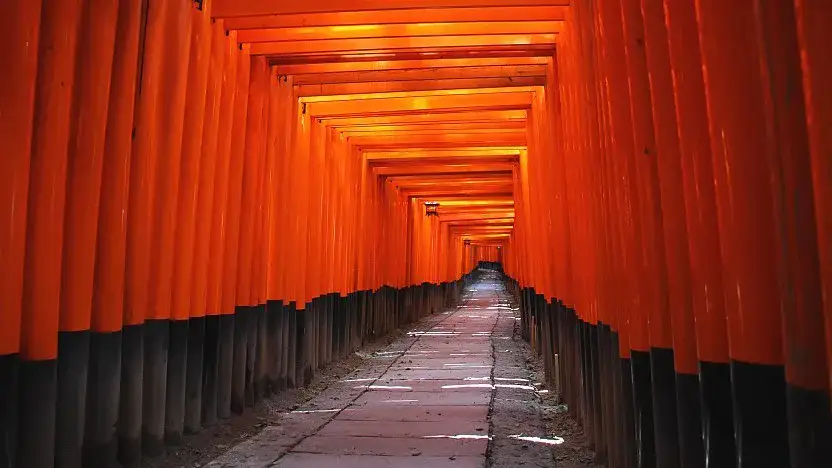
Fushimi Inari Shrine (伏見稲荷大社, Fushimi Inari Taisha) is a major Shinto shrine in southern Kyoto, renowned for its thousands of vermilion torii gates that line a network of trails behind the main buildings. These trails wind through the wooded forest of sacred Mount Inari, which rises 233 meters and is part of the shrine grounds.
As the most important of thousands of shrines dedicated to Inari, the Shinto god of rice, Fushimi Inari features numerous fox statues, as foxes are believed to be Inari's messengers. The shrine has ancient origins, predating the move of Japan's capital to Kyoto in 794.
While many foreign visitors come primarily to hike the mountain trails, the shrine buildings themselves are also worth seeing. At the entrance stands the Romon Gate, donated in 1589 by the famous leader Toyotomi Hideyoshi. Behind it is the main hall (honden), where visitors are encouraged to pay respects to the resident deity with a small offering.
At the back of the main grounds lies the entrance to the torii gate-covered hiking trail, beginning with two dense, parallel rows of gates called Senbon Torii ("thousands of torii gates"). The gates along the entire trail are donations from individuals and companies, with the donor's name and donation date inscribed on the back. Donations start at around 400,000 yen for a small gate and exceed one million yen for a large one.
The hike to the summit and back takes about 2-3 hours, but visitors can walk as far as they like before turning back. Along the way, there are smaller shrines with stacks of miniature torii gates donated by visitors on smaller budgets. Several restaurants serve local specialties like Inari Sushi and Kitsune Udon ("Fox Udon"), both featuring aburaage (fried tofu), said to be a favorite food of foxes.
After about 30-45 minutes of ascent, as the density of torii gates gradually decreases, visitors reach the Yotsutsuji intersection roughly halfway up the mountain. Here, nice views of Kyoto can be enjoyed, and the trail splits into a circular route to the summit. Many hikers only go this far, as the trails offer little variation beyond this point and the gate density continues to thin.
Visitor information
Practical details to check before planning this stop.
- Hours
- Always open
- Closed
- No closing days
- Admission
- Free
- English name
- Fushimi Inari Taisha
- Original name
- Fushimi Inari Shrine
Verify details before visiting. Currency conversion is indicative and may vary over time.