
What to know
Tofukuji (東福寺, Tōfukuji) is a large Zen temple in southeastern Kyoto, renowned for its breathtaking autumn colors. Founded in 1236 by the powerful Fujiwara clan, its name combines those of two great Nara temples also linked to the Fujiwara: Todaiji and Kofukuji. As one of Kyoto's principal Zen temples, it serves as the head temple of its own school within the Rinzai sect of Zen Buddhism.
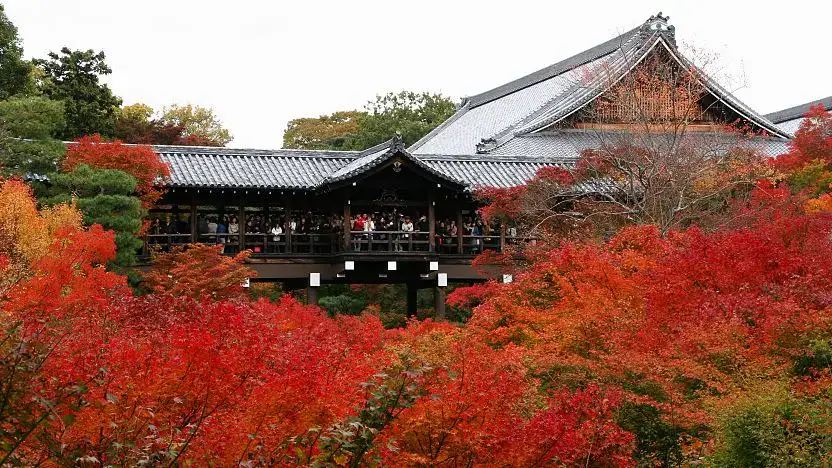
In autumn, visitors flock from across Japan to witness Tofukuji's vibrant foliage. The most iconic view is from the Tsutenkyo Bridge, which spans a valley filled with lush maple trees. The bridge itself offers equally stunning vistas, and the 100-meter-long covered walkway becomes extremely crowded when colors peak, typically from mid to late November.
Several parts of Tofukuji's grounds are free to enter, including the area around some of its largest and most impressive buildings. The 22-meter-tall Sanmon Gate is the oldest Zen gate of its kind, dating back to 1425. Behind it stands the Hondo (main hall), even larger but a recent reconstruction from 1934.
Surrounding these massive structures are a few temple buildings from the early Muromachi Period (1333-1573), rare surviving examples of Zen architecture from that era. These include the meditation hall (zendo), belfry (shoro), bath (yokushitsu), and lavatory (tosu).
The Hojo, the head priest's former living quarters, is one of Tofukuji's two paid areas. Rock gardens were often built alongside hojo buildings, but Tofukuji's Hojo gardens are unique for encircling the building on all sides. Each garden has a distinct character, using pebbles, large rocks, moss, trees, and checkered patterns. The Hojo was last reconstructed in 1890, and the gardens are relatively modern creations from the late 1930s.
The other paid area includes the Tsutenkyo Bridge and Kaisando Hall, the mausoleum of the temple's first head priest. The stone path in front of Kaisando is flanked by contrasting gardens: a dry rock garden on the left and a lush pond garden on the right. The Kaisando and its gardens were last reconstructed during the Edo Period (1603-1868).
Visitor information
Practical details to check before planning this stop.
- Hours
- 9:00 to 16:30 (April to October)
- Closed
- No closing days
- Admission
- 600 yen (~$3.84) (Tsutenkyo Bridge and Kaisando Hall)
- English name
- Original name
- Tofukuji Temple
Verify details before visiting. Currency conversion is indicative and may vary over time.