
What to know
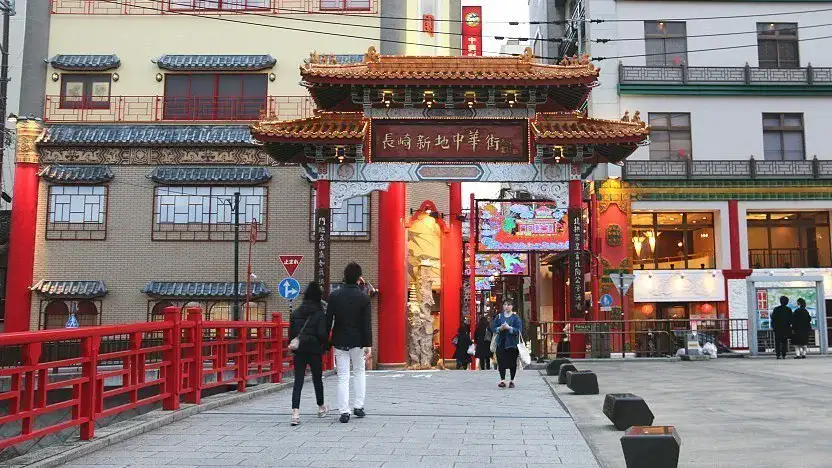
Nagasaki Shinchi Chinatown (長崎新地中華街, Nagasaki Shinchi Chūkagai) is Japan's oldest Chinatown. This downtown district spans about one city block, crisscrossed by narrow lanes and filled with shops and restaurants. It's the top spot to sample Nagasaki's famous Chinese-inspired dishes: chanpon and sara udon.
During Japan's isolation period, Nagasaki was the only major port open to foreign trade, and Chinese merchants were allowed in alongside the Dutch. Like Dejima for the Dutch, Chinatown began as a reclaimed island (hence the name Shinchi, meaning "new land") where the Chinese conducted business. Further land reclamation has since connected it to the mainland.
For Chinese New Year, Chinatown becomes the heart of the Nagasaki Lantern Festival, a popular event illuminating the city with thousands of lanterns. The festival dates vary with the lunar calendar, typically spanning two weeks from late January to early March.
Unlike the Dutch, who were confined to Dejima, Chinese traders initially moved freely around Nagasaki. However, during the Edo Period, they were restricted to a walled district not far from Shinchi, where trade continued.
Today, this former Chinese settlement (Tojin Yashiki) retains a few buildings from its past, with a large Chinese-style gate at the entrance. The tranquil, atmospheric neighborhood is perfect for a stroll, with narrow lanes dotted by Chinese-style temples and structures.
Nagasaki Chinatown is a short walk from the Shinchi Chinatown (Shinchi Chukagai) tram stop on tram lines 1 and 5.
Visitor information
Practical details to check before planning this stop.
- Hours
- Restaurants typically open from 11:00 to 15:00 and 17:00 to 21:00
- Closed
- Varies by restaurant, most are open everyday
- Admission
- English name
- Original name
- Nagasaki Chinatown
Verify details before visiting. Currency conversion is indicative and may vary over time.