What to know
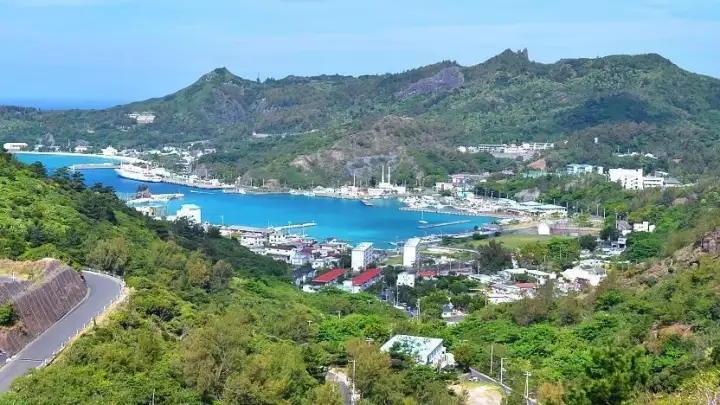
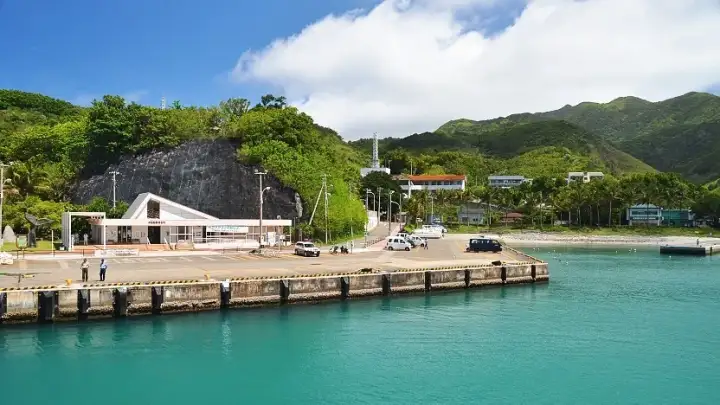
The Ogasawara Islands (小笠原諸島, Ogasawara Shotō), also known as the Bonin Islands, are a volcanic archipelago in the Pacific Ocean about 1000 kilometers south of Tokyo, which administratively governs them. The only way to reach the islands is by a weekly 24-hour ferry from Tokyo. Only the two largest islands, Chichijima ("Father Island") and Hahajima ("Mother Island"), are inhabited.
Lying at a similar latitude to Okinawa, the Ogasawara Islands enjoy a subtropical climate with warm temperatures year-round. Visitors are drawn by the remoteness, relaxed hospitality, beautiful beaches, coral reefs, and jungle-covered hills. Outdoor activities include whale watching, swimming with dolphins, hiking, sea kayaking, snorkeling, and diving.
Because the Ogasawara Islands were never connected to mainland Japan or any continent, they host many unique plants and animals found nowhere else, including various birds, insects, and crabs. To protect this unique environment, visitors must avoid bringing seeds or alien species, and refrain from collecting or harming local flora and fauna. Camping and off-trail hiking are strictly prohibited.
The Ogasawara Islands were discovered in 1593 by Ogasawara Sadayori, who claimed them for the Tokugawa Shogunate. They remained largely uninhabited until 1830, when a small group of Westerners and Pacific Islanders established a colony on Chichijima. The islands officially became Japanese territory in 1875 and later served as military bases during WWII. After the war, they were occupied by the United States until their return to Japan in 1968.
The remoteness comes with minor inconveniences. Credit card acceptance is limited, while cash can be withdrawn at postal ATMs in JA Bank branches on both islands (note limited hours). Cell phone coverage is mostly restricted to populated areas of Chichijima and Hahajima.