
What to know
During the Edo Period (1603–1868), the Confucian scholar Hayashi Razan named Gero Onsen (下呂温泉) one of Japan's three finest hot springs. Though the town has grown more urban since then, the waters still possess the exceptional quality that earned them such renown.
Gero lies between Nagoya and Takayama, about an hour south of Takayama. This location makes it a convenient stopover or a great alternative for accommodation during the Takayama Festival, when rooms in Takayama are scarce.
Hot springs are Gero's main draw. The town has three public bathhouses plus numerous baths in ryokan, many of which open to non-guests for a fee at certain times.
A great way to try several baths is to buy a Yumeguri Tegata (spa pass). This wooden tablet, available at the tourist office, ryokan, souvenir shops, and convenience stores, grants three visits to any of over a dozen participating ryokan. It costs 1,300 yen, is valid for six months, and makes a nice souvenir.
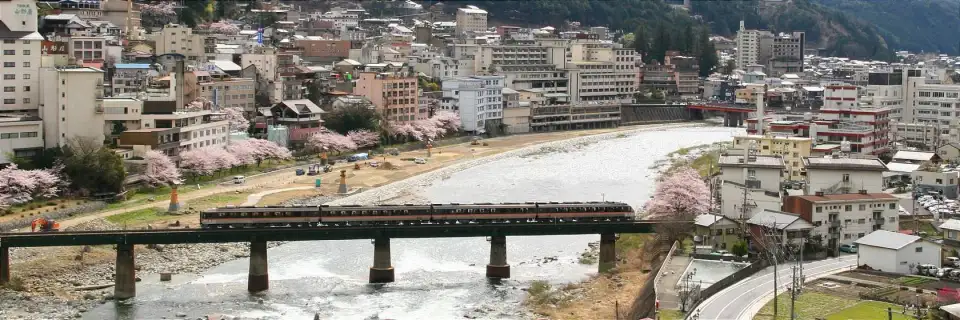
Around town you'll find many free footbaths where you can sit and relax after sightseeing. One is the riverside Funsenike pool, originally a bathing pool but converted to a footbath because its exposed location caused constant complaints and trouble.
Onsenji Temple honors Yakushi Nyorai, the Buddha of healing. His image is said to have restored the hot spring flow after a large earthquake blocked it. Climb the stone stairs to the temple gate for a view of the town and river.
Just above town is Gassho Village (Gero Onsen Gassho Mura), an open-air museum of gassho-zukuri farmhouses—traditional steep-roofed houses from the Shirakawago region. You can tour the houses, watch performances, or try folk crafts. The complex also houses a komainu (shrine guardian dog) museum.
The one-way trip from Nagoya to Gero takes about 90 minutes and costs around 4,500 yen on the JR Hida limited express. Trains run every 1–2 hours, and the journey is fully covered by the Japan Rail Pass. (How to get to Nagoya)