
What to know
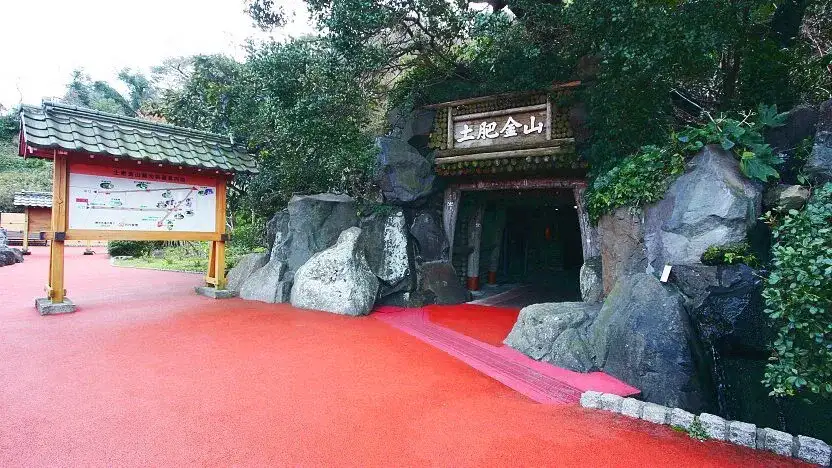
The Toi Kinzan Gold Mine (土肥金山) was the second most productive gold mine in Japan, after the Sado Kinzan Gold Mine. It operated during the Edo Period (1603–1868) and supplied gold for coin production. The mine briefly reopened in the 1900s and, by its final closure in 1965, had yielded about 40 tons of gold and 400 tons of silver.
Today, the Toi Kinzan Gold Mine is open to the public as a museum featuring dioramas and artifacts about its operations and gold mining in general. The highlight is a 400-meter restored mining tunnel with Japanese explanations and motion-activated animatronic miners. Simple English signs provide information on the mine's history, working conditions, tools, and techniques.
Across from the tunnel exit, the museum displays a diorama of the gold manufacturing process, Edo Period mining artifacts, and gold ores from across Japan. Visitors can try lifting gold bars or a chest of coins to feel their weight. The museum is famous for housing the world's heaviest gold bar, weighing 250 kilograms.
For an extra fee, visitors can try gold panning indoors. In 30 minutes, you can pan for as much gold as you find and take it home. The souvenir shop sells gold-plated souvenirs and foods decorated with gold flakes.
From Shuzenji Station, take a bus to Dogashima (堂ヶ島) and get off at Toi Kinzan (土肥金山, 50 minutes, 1680 yen one way, hourly). The gold mine is a short walk from the bus stop.
How to get to and around the Izu Peninsula
Visitor information
Practical details to check before planning this stop.
- Hours
- 9:00 to 17:00 (entry until 16:30; gold panning until 16:20)
- Closed
- No closing days
- Admission
- 1200 yen (~$7.68) (separate fees apply for activities, such as gold panning)
- English name
- Original name
- Toi Kinzan Gold Mine
Verify details before visiting. Currency conversion is indicative and may vary over time.