
What to know
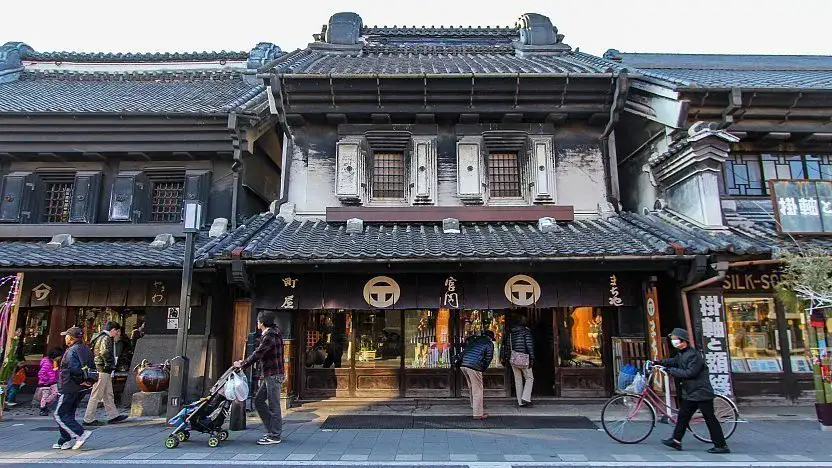
Kawagoe's Warehouse District (蔵造りの町並み, Kurazukuri no Machinami) offers a nostalgic glimpse of the Edo Period (1603–1867). The term "kura" means "warehouse" in Japanese, and Kurazukuri refers to clay-walled, warehouse-style buildings constructed with Edo architectural influences.
Historically, Kawagoe served as a key commercial hub supplying resources to Edo (modern-day Tokyo). The thriving trade allowed many merchants to amass wealth and build both their warehouses and stores in the Kurazukuri style—more so than in other towns. Several of these buildings have survived to this day. Mostly housing shops and restaurants, they line the main Kurazukuri Street, which stretches a few hundred meters. However, heavy regular traffic along the street detracts from the historic atmosphere and confines pedestrians to narrow sidewalks.
In the past, Japanese cities were predominantly built from wood, making them highly susceptible to fires. Kurazukuri construction was designed to be fireproof and secure against intruders. These buildings were expensive to construct, as they required thick, multi-layered walls. Thanks to prosperous trade with Edo, Kawagoe's merchants thrived, and many showcased their wealth by building the most attractive structures they could afford.
A short walk from the main street stands the Bell Tower (時の鐘, Toki no Kane), a landmark and symbol of Kawagoe. It chimes four times daily (6:00, 12:00, 15:00, and 18:00). The tower was rebuilt in 1894 after the Great Kawagoe Fire of 1893 destroyed its predecessor.
One of the houses open to the public is the Museum of Kurazukuri (currently closed indefinitely for renovations). Housed in a former tobacco wholesaler's shop, the museum allows visitors to see the interior of a Kurazukuri building beyond the storefront. Exhibits include traditional machines used in the past. The museum is located along the main street.
A minute's walk away is Candy Alley (Kashiya Yokocho), a wonderful place to try traditional Japanese sweets while soaking up the ambiance of decades past. Named after the Taisho Period (1912–1926), Taisho-roman Street lies between Hon-Kawagoe Station and the Warehouse District. Its Taisho-style architecture adds character to the walk toward the Kurazukuri.
Visitor information
Practical details to check before planning this stop.
- Hours
- 9:30 to 18:30 (until 17:30 from October to March)
- Closed
- Closed indefinitely for renovations
- Admission
- 300 yen (~$1.92) (festival museum only)
- English name
- Kawagoe Festival
- Original name
- Warehouse District
Verify details before visiting. Currency conversion is indicative and may vary over time.