
What to know
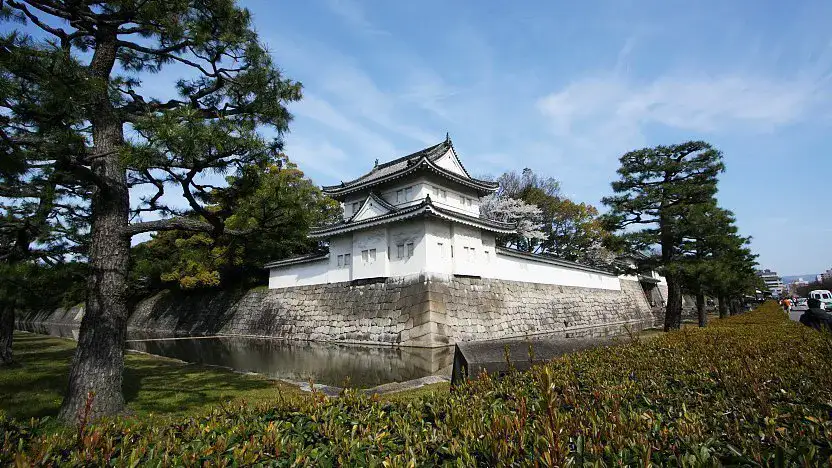
Nijo Castle (二条城, Nijōjō) was built in 1603 as the Kyoto residence of Tokugawa Ieyasu, the first shogun of the Edo Period (1603-1868). His grandson Iemitsu completed the castle's palace buildings 23 years later and expanded the castle by adding a five-story castle keep.
After the Tokugawa Shogunate fell in 1867, Nijo Castle was used as an imperial palace for a while before being donated to the city and opened to the public as a historic site. Its palace buildings are arguably the best surviving examples of castle palace architecture from Japan's feudal era, and the castle was designated a UNESCO World Heritage site in 1994.
Nijo Castle can be divided into three areas: the Honmaru (main circle of defense), the Ninomaru (secondary circle of defense), and some gardens around them. The entire castle grounds and the Honmaru are surrounded by stone walls and moats.
Visitors to Nijo Castle enter the grounds through a large gate in the east. English audio guides are available for rent at a kiosk just inside the gate. Venturing further into the castle brings you to the Chinese-style Karamon Gate, the entrance to the Ninomaru (secondary circle of defense), where the castle's main attraction, the Ninomaru Palace, is located.
The Ninomaru Palace served as the residence and office of the shogun during his visits to Kyoto. Surviving in its original form, the palace consists of multiple separate buildings connected by corridors with so-called nightingale floors, which squeak when stepped upon as a security measure against intruders. The palace rooms are tatami mat-covered and feature decorated ceilings and beautifully painted sliding doors (fusuma).
The tour route passes by multiple waiting and audience rooms. Only the highest-ranked visitors were allowed all the way into the main audience room where the shogun would sit on an elevated floor, flanked by bodyguards hidden behind doors. Lower-ranked visitors were allowed only as far as the adjoining rooms without a direct view of the shogun. The innermost rooms consisted of offices and living chambers, the latter of which were only accessible to the shogun and his female attendants.
Visitor information
Practical details to check before planning this stop.
- Hours
- 8:45 to 17:00 (entry until 16:00)
- Closed
- December 29-31; just the Ninomaru Palace is also closed on Tuesdays in January, July, August and December (or following day if Tuesday is a national holiday) and from December 26
- Admission
- 800 yen (~$5.12); plus an additional 500 yen (~$3.2) to enter the Ninomaru Palace
- English name
- Nijojo
- Original name
- Nijo Castle (Nijojo)
Verify details before visiting. Currency conversion is indicative and may vary over time.