
What to know
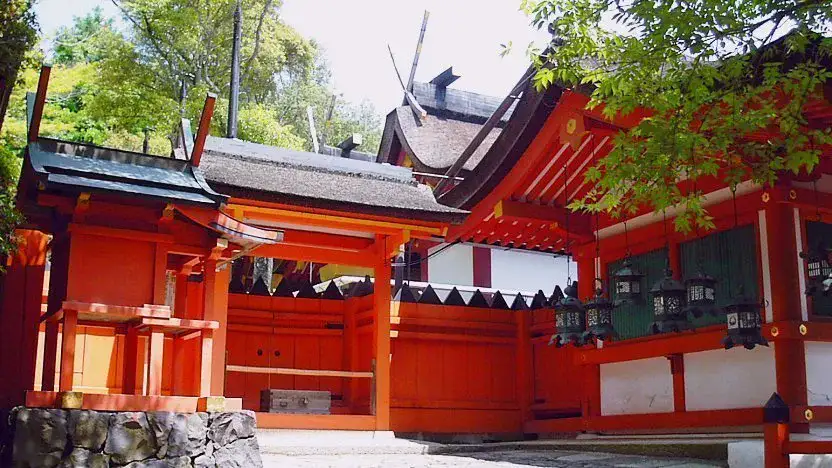
Kasuga Taisha (春日大社) is Nara's most celebrated shrine. Founded at the same time as the capital, it is dedicated to the deity who protects the city. It also served as the tutelary shrine of the Fujiwara clan, Japan's most powerful family during much of the Nara and Heian periods. Like the Ise Shrines, Kasuga Taisha was rebuilt every 20 years for centuries, but this tradition ended at the close of the Edo period.
Beyond the free-to-visit offering hall, a paid inner area offers a closer look at the shrine's inner buildings. At the heart lies the main sanctuary, featuring multiple shrine buildings in the distinctive Kasuga style, characterized by a sloping roof that extends over the front.
Kasuga Taisha is renowned for its lanterns, donated by worshippers. Hundreds of bronze lanterns hang from the buildings, while stone lanterns line the approach paths. They are lit only twice a year during the Lantern Festivals in early February and mid-August.
Numerous smaller auxiliary shrines dot the woods around Kasuga Taisha. Twelve of them line a path past the main complex, each dedicated to one of the twelve lucky gods. Among them are Wakamiya Shrine, an important cultural property known for its dance festival, and Meoto Daikokusha, which enshrines married deities and is believed to bring good fortune in matchmaking and marriage.
A short walk from the main complex lies the Kasuga Taisha Shinen Manyo Botanical Garden, displaying about 250 plant species mentioned in the Manyoshu, Japan's oldest poetry collection from the Nara period. A large part of the garden is dedicated to wisteria, which usually blooms from late April to early May.
The shrine grounds also house the Kasuga Taisha Museum, a treasure hall near the main complex that exhibits relics including two sets of large ornate drums. Additionally, the Kasuga Primeval Forest, a sacred old-growth forest belonging to the shrine, covers the mountain behind Kasuga Taisha but is closed to the public.
Visitor information
Practical details to check before planning this stop.
- Hours
- 6:30 to 17:30 (March to October)
- Closed
- No closing days (the inner area is occasionally closed)
- Admission
- Free (outer area), 700 yen (~$4.48) (inner area)
- English name
- Kasuga Taisha
- Original name
- Kasuga Taisha
Verify details before visiting. Currency conversion is indicative and may vary over time.