
What to know
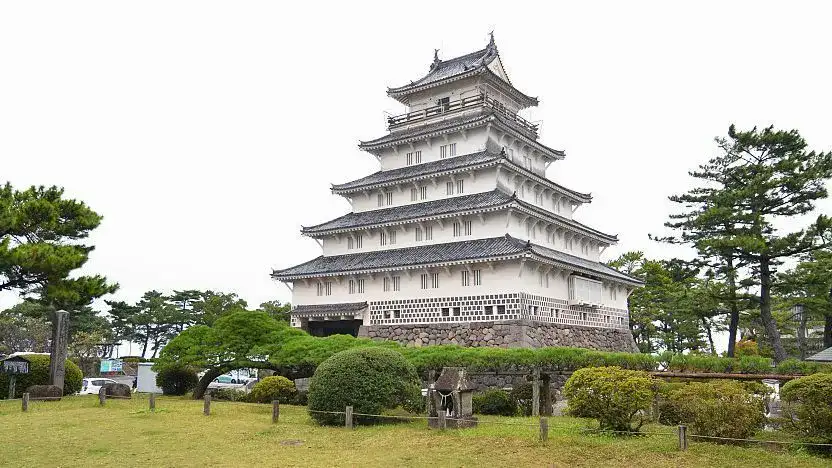
Shimabara Castle (島原城, Shimabarajō) is a white-walled castle built in the early Edo Period as the seat of the local feudal lord. It was an extravagant centerpiece, far larger than castles in domains of similar status. Heavy taxation to fund its construction, along with persecution of local Christians, were major triggers of the Shimabara Rebellion (1637-1638).
The castle was destroyed during the Meiji Period (1868-1912). The current buildings are concrete reconstructions from 1964. The five-story keep houses the Castle Tower Museum, displaying Christian artifacts excavated from the ruins, along with weapons and armor. An observation deck on the 5th floor offers views of Mount Unzen and across the water to Kumamoto on clear days.
One of the turrets (yagura) behind the keep contains the Seibo Memorial Hall, an art museum showcasing the work of Kitamura Seibo, the sculptor famous for creating the Nagasaki Peace Park statue. The museum displays sketches, statues, and conceptual models of that statue. Several more of his statues stand in front of the museum.
Additional small museums on the grounds include a Folk Museum with 20th-century daily life items, the Sightseeing Revival Hall with an exhibition on the 1990-1995 eruption of Mount Unzen, and the west turret with a dusty display of kokeshi dolls and tenugui (traditional hand towels) printed with famous Japanese castles.
The castle was once surrounded by residential districts of samurai serving the local lord. One such district, Teppo-cho (Gun Town), named after the gunmen foot soldiers who lived there, has been preserved with three restored samurai houses open to the public. The district lies along a small, atmospheric canal street about a five-minute walk from the castle.
The City of Swimming Carp, a quiet neighborhood with narrow canals filled with hundreds of brightly colored koi, lies south of the castle. The waterways are fed by filtered spring water that passes through Mount Unzen's volcanic layers before bubbling up in the area. Along the streets are two preserved traditional-style houses open to visitors. One, the Shimeiso House, has a beautiful garden and spring-fed pond.
Visitor information
Practical details to check before planning this stop.
- Hours
- 9:00 to 17:30 (entry until 17:00)
- Closed
- No closing days
- Admission
- 700 yen (~$4.48)
- English name
- Shimabara Castle
- Original name
- Shimabara Castle
Verify details before visiting. Currency conversion is indicative and may vary over time.