Travel interests
Japanese Pottery
Guide for travelers to appreciate Japanese pottery.
Pottery is one of Japan's most celebrated art forms. Travelers can admire classic ceramics in museums, visit famous pottery towns, participate in hands-on activities, or enjoy tableware at local restaurants.
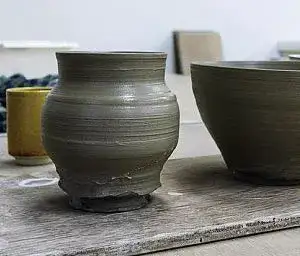
The earliest Japanese ceramics date back about 10,000 years to the Jomon Period (13,000 BC–300 BC), when most people were hunter-gatherers. The era's name, Jomon, refers to the cord-marked patterns typical of its unglazed pottery, which was fired in large bonfires. It wasn't until the Kofun Period (300–538 AD) that firing techniques advanced and covered kilns came into use.
Early Japanese ceramics were either earthenware or stoneware. Earthenware was fired at lower temperatures and remained porous if unglazed, while stoneware was fired at higher temperatures, producing non-porous vessels that didn't require glazing to be waterproof.
In the early 1600s, kaolin—the clay needed for porcelain—was first discovered in Japan in the town of Arita. Porcelain allowed for stronger, more durable, yet thinner vessels compared to earlier ceramics.
related places
6
Arita TownArita is a small town in western Saga Prefecture and the birthplace of Japanese porcelain. Everything in town revolves around pottery. Visitors can admire local creations at multiple museums, explore historical sites related to the discovery of kaolin and porcelain production, and participate in workshops.Pottery stylesOkawachiyamaOkawachiyama is a small, isolated mountain village just outside central Imari, across the mountains from Arita. It was one of the first places in Japan to produce porcelain and remained secluded to protect the valuable new technology from competitors. Ceramics made here were known as Nabeshima-yaki, after the ruling clan. Today, pottery studios and galleries line the picturesque streets.Pottery stylesImari TownAcross the mountains from Arita, along the coast, lies the town of Imari. Its port was used to ship ceramics from Arita across Japan and the world, while a local pottery industry also developed. Several pottery-related attractions can be found around town.Pottery stylesYoshika Taibi Memorial MuseumThe Yoshika Taibi Memorial Museum is located on the outskirts of the city. It presents a large collection of valuable Hagi-yaki pottery, as well as ceramic pieces and paintings by the artist and potter after whom the museum is named. In front of the museum is a workshop where visitors can observe the making of Hagi-yaki, and a shop where Hagi-yaki wares can be purchased.Pottery stylesKaratsu-yaki Pottery GalleryLocated on the second floor of the Furusato Kaikan Arpino next to Karatsu Station, the Karatsu-yaki Pottery Gallery is one of the best places to see local pottery. The gallery outlines the history of Karatsu pottery and displays many artworks. Locally made pottery is also sold here, and there is an experience section where visitors can try painting pottery.Pottery stylesTsuboya Pottery DistrictLocated in central Naha on Okinawa Island, the Tsuboya district is the center of Okinawan pottery. A nice museum and several pottery workshops and stores can be found in the area today.Pottery styles
