
What to know
After the shogunate fell in 1867, loyalist forces gathered in the northern Tohoku region to resist the new government. They were decisively defeated at Tsuruga Castle in 1868. From Iimoriyama Hill, a group of young Aizu soldiers from the Byakkotai (White Tiger Corps) saw their castle engulfed in flames and committed seppuku.
The twenty boys, aged 14 to 16, had made a grave mistake: the castle had not actually fallen; the flames they saw were from outside the walls. Nonetheless, their story of loyalty and devotion became famous, inspiring numerous movies and manga adaptations.
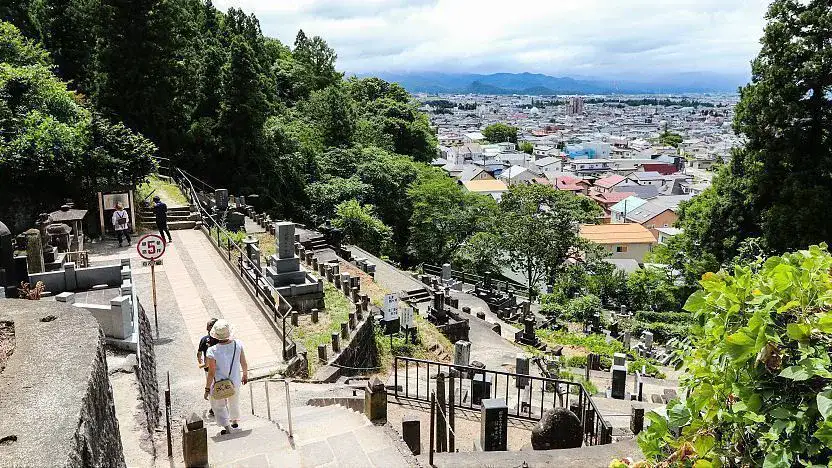
Iimoriyama (飯盛山), the site of their suicide, is now a popular tourist attraction. At the base of the hill, souvenir shops and two museums dedicated to the Byakkotai can be found. The larger Byakkotai Memorial Hall is along the main path, while the smaller Byakkotai Folklore and Historical Museum is slightly off the main route.
Further up the mountain, accessible by stairs or a paid escalator (250 yen), are several monuments, including 19 tombs for the Byakkotai soldiers. (One of the 20 boys survived his suicide attempt.) At a viewpoint overlooking Tsuruga Castle, a statue of a Byakkotai soldier gazes into the distance.
Two other monuments may surprise visitors: a column from Italy and a plaque from Germany, both from Japan's fascist allies during the war. The column, topped with an eagle statue, was taken from Pompeii, while the plaque was a gift from a diplomat in 1935.
On the northern side of the hill are other points of interest, such as a shrine and the unique Sazaedo Pagoda. Visitors can enter the pagoda and walk up a spiral ramp to the top and back down.
Visitor information
Practical details to check before planning this stop.
- Hours
- 9:00 to 16:00 (entry until 15:30)
- Closed
- Mondays and Tuesdays
- Admission
- 400 yen (~$2.56)
- English name
- Original name
- Iimoriyama
Verify details before visiting. Currency conversion is indicative and may vary over time.