
What to know
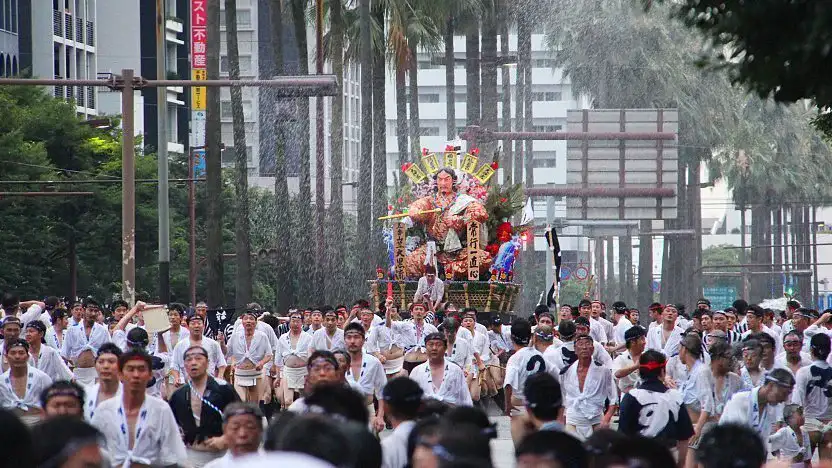
The Hakata Gion Yamakasa (博多祇園山笠) is one of Japan's most fascinating festivals. Held annually during the first half of July, it culminates in a thrilling time-trial race in the early morning of July 15. On that day, seven neighborhoods from Fukuoka's Hakata district compete by pushing elaborately decorated floats along a five-kilometer course through the city.
The festival features two types of floats:
The larger kazariyama floats tower over ten meters tall and weigh more than two tons. In the past, they were raced through the streets, but the introduction of power lines during the Meiji Period (1868–1912) made this difficult. Today, they serve only as decorative floats. From July 1 to 14, 14 of these floats are displayed across the city, including two at Hakata Station and Canal City Hakata.
For the race, smaller kakiyama floats are used—about five meters tall and one ton in weight. There are seven of them, one for each participating neighborhood. The floats have no wheels; they are dragged through the streets while water is sprayed ahead to reduce friction and cool the participants.
From July 10 to 14, the seven teams hold practice runs and parades to prepare for the main race. A helpful English booklet with detailed maps and schedules is available for these events, which are well worth watching. On July 15, just after 1 a.m., all teams line up behind the start line in front of Kushida Shrine, the festival's host shrine.
On July 15 at 4:59 a.m., just before sunrise, the first team starts the race, followed by the others at five-minute intervals. Despite the early hour, thousands of spectators line the five-kilometer course, which includes tight turns and long stretches along narrow lanes and broad streets. Each team takes about 30 minutes of intense effort to complete the course.
Visitor information
Practical details to check before planning this stop.
- Hours
- Closed
- Admission
- English name
- Original name
- Hakata Gion Yamakasa Festival
Verify details before visiting. Currency conversion is indicative and may vary over time.